A serious accident can change your life in seconds, but you don't have to face it alone. You may be home after a Houston freeway collision, sore, shaken, and unsure whether the pain will pass or what to say when an insurance adjuster calls. Start with your health, preserve what you can, and don't let anyone rush you into deciding what your claim is worth.
A motorcycle accident injury can affect far more than your ability to ride. Medical care, missed work, insurance questions, and uncertainty about fault can pile up at once. The choices you make in the first hours and days can help protect both your recovery and the evidence needed to explain what happened.
The First Moments After a Motorcycle Crash in Texas
At the scene, your first job isn't figuring out who will pay. It's getting yourself and everyone else out of immediate danger. Check for injuries and call 911 when anyone needs medical help. If no one needs emergency care and it's safe to do so, move vehicles out of traffic. Don't move an injured person unless staying put presents a more immediate danger.
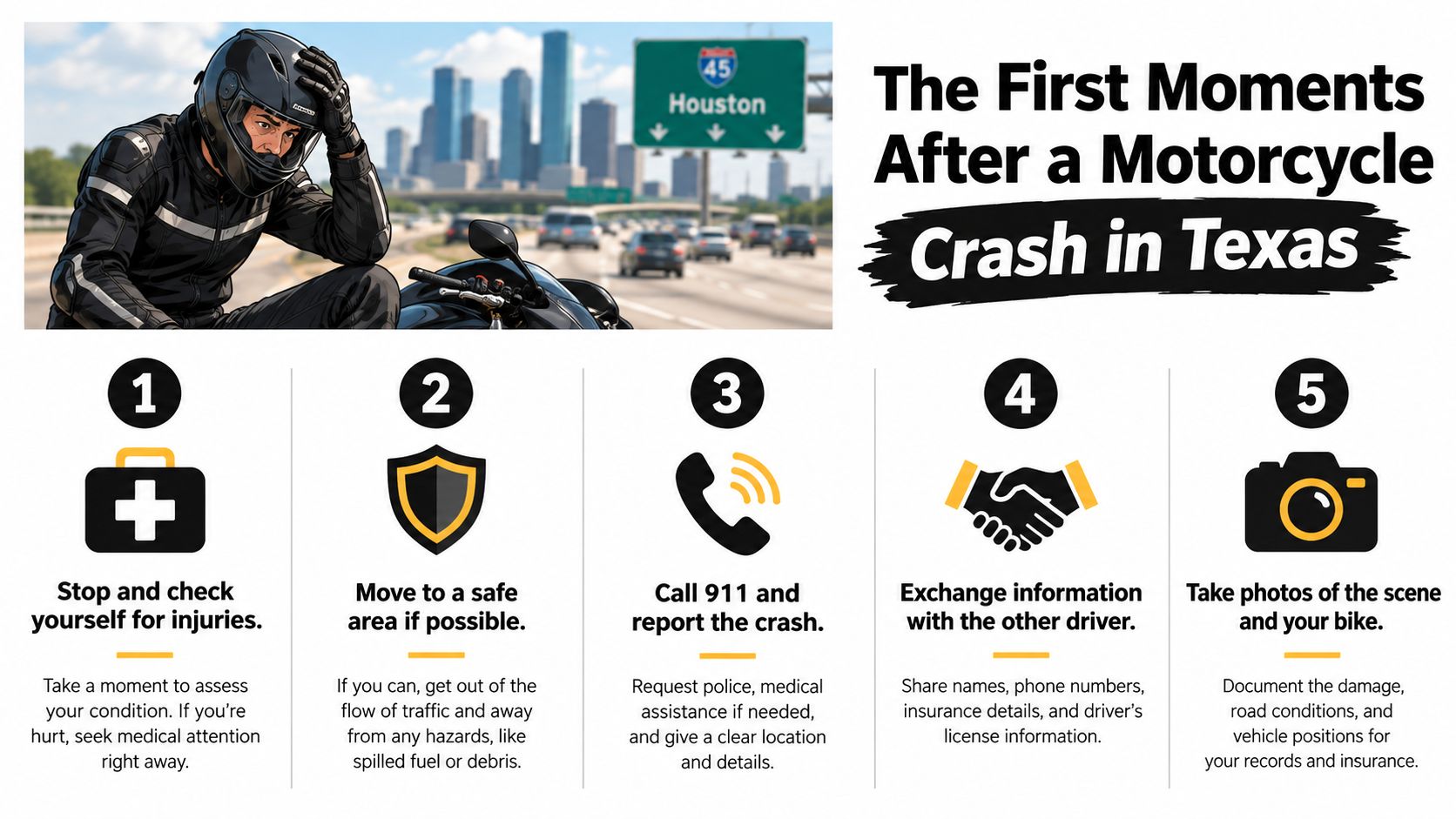
TxDOT advises calling police when someone is injured or killed, a vehicle can't be moved, intoxication is suspected, a driver lacks insurance, or a driver leaves the scene. Once it's safe, exchange names, contact details, driver's license and vehicle information, and insurance details. Get witness contact information, note the exact location, and take photos of the vehicles, your motorcycle, the roadway, signs, signals, and any visible injuries. Don't put yourself in traffic to get a picture.
Keep the scene calm. Don't argue about fault or guess aloud about what happened. A hurried admission can be repeated later without the context you'd have after reviewing the evidence.
Practical rule: Give the facts you know. Don't speculate about speed, distance, or fault while you're shaken or injured.
Call your own insurer promptly enough to meet your policy's reporting requirements, but don't confuse reporting the collision with agreeing to a recorded interview. The other driver's insurer doesn't represent you. If an adjuster asks for a recorded statement or a broad medical authorization, get legal advice before you agree.
Seek medical evaluation even if you think you're only bruised. Pain, concussion symptoms, and other injuries may become clearer later, and a medical record made soon after the crash helps connect your condition to the collision. Keep your discharge papers and follow the instructions you receive.
The risk is real. In 2023, motorcyclists made up 15% of all traffic fatalities and 20% of deaths among motor-vehicle occupants, with a fatality rate nearly 28 times that of passenger-car occupants, according to NHTSA motorcycle crash data. Those figures don't decide your case, but they explain why even a collision that looks survivable can cause serious harm. Your first-day checklist is simple: get safe, call for help, exchange information, photograph what you can, seek medical care, and save every document.
Building a Medical and Evidence Record That Holds Up
A strong injury claim tells a clear story over time. Keep a dated record of your emergency evaluation, imaging, diagnoses, procedures, rehabilitation, work restrictions, and symptoms that remain. Save bills and discharge instructions, but don't stop at bills. The medical record should show how the collision affected your health, what treatment followed, and whether you'll need care in the future.

A normal first examination doesn't always rule out a serious problem. Concussion symptoms, spinal injuries, vascular injuries, or orthopedic problems may need follow-up assessment. Tell your provider what hurts, when symptoms started, and whether they change. Follow discharge directions, attend recommended appointments, and report worsening symptoms. If you miss care, explain why and document it rather than leaving an unexplained gap.
Helmet evidence matters, but it's only one part of the case. A CDC-summarized Cochrane review found helmet use associated with a 42% reduction in fatal-injury risk and a 69% reduction in head-injury risk (CDC-hosted review summary). Preserve your helmet and damaged gear. Don't discard, repair, or clean them before documenting their condition. Photograph the exterior and interior, note whether the helmet was certified and fastened, and keep the motorcycle where it can be inspected.
For recovery questions at home, rely on your clinician's instructions. If you're unsure whether cold or heat is appropriate for a particular injury, this science-backed ice and heat guide can help you prepare questions for your provider. It doesn't replace an examination or individualized medical advice.
A symptom-and-expense log can capture details that are easy to forget: pain, sleep disruption, difficulty with everyday tasks, appointments, prescriptions, and missed work. Organizing those records can make the medical timeline easier to understand. Learn more about how medical records affect a Texas injury claim. The goal is a coherent account supported by treatment and evidence, not just a pile of paperwork.
How Texas Comparative Fault Affects Your Motorcycle Injury Claim
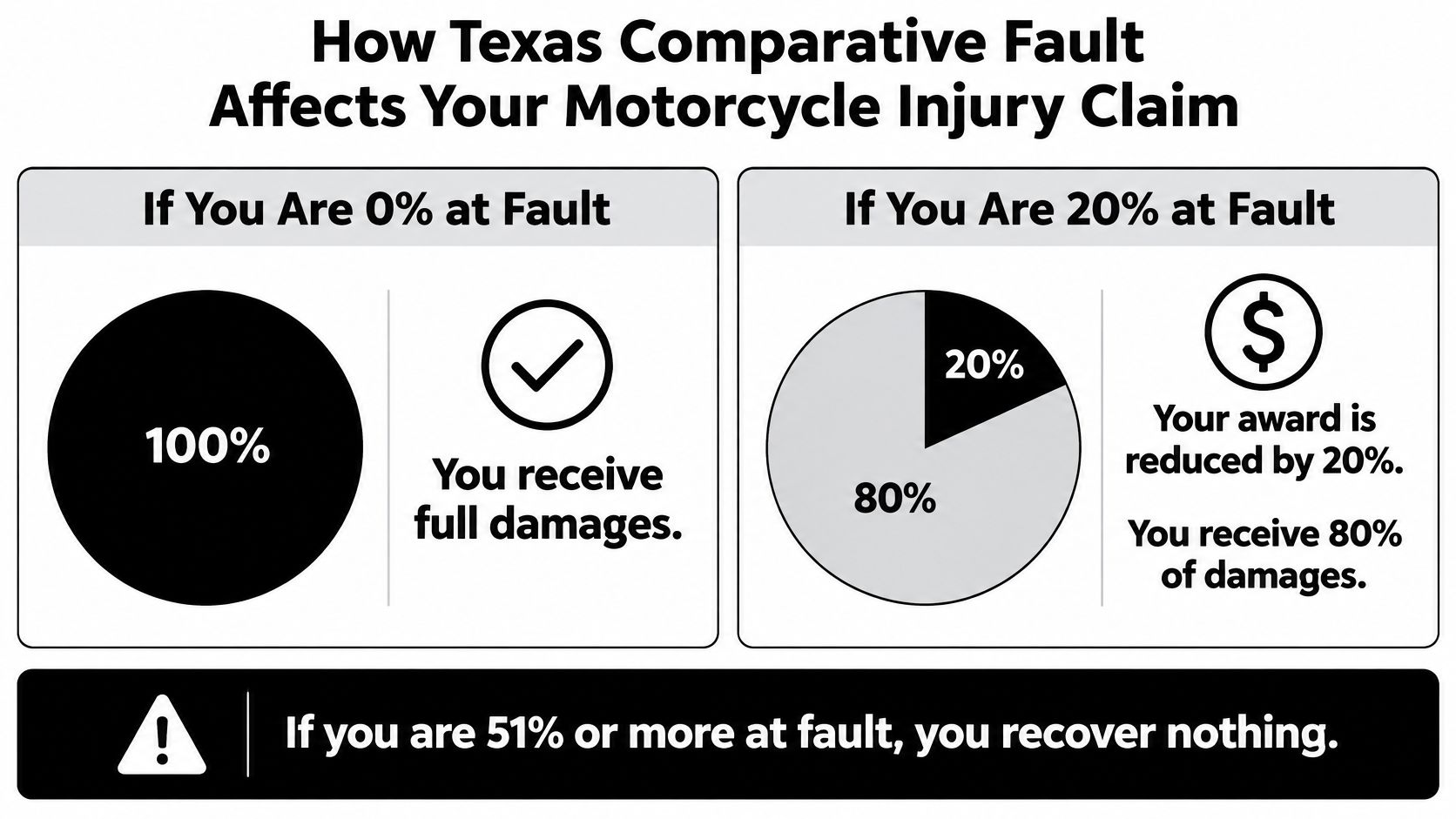
Texas doesn't automatically bar an injury claim just because someone says the rider made a mistake. Under the state's modified comparative-responsibility rule, the fact finder assigns each responsible person a percentage. If you're more than 50% responsible, you can't recover damages. If your share is 50% or less, your award is generally reduced by your percentage, as provided by Texas Civil Practice and Remedies Code §33.001.
For example, after a Houston freeway crash, a jury could assign 70% responsibility to a turning driver, 20% to the motorcyclist, and 10% to another responsible party. If the damages were $100,000, the rider's award would be reduced by the rider's 20% share. That's an example of how the rule works, not a prediction of what any particular case is worth.
A claim's fault percentage should come from evidence, not an adjuster's first impression. Traffic-camera footage, photographs, vehicle damage, witness accounts, medical records, and available phone or vehicle data may help show how the collision happened. At an intersection, the key questions may include what each driver could see, when they could see it, and whether either could have avoided the crash.
Don't admit fault just to be polite, and don't let an insurer's description of the collision go unchallenged. A rider's speed or lane position may be relevant, but it doesn't automatically erase a driver's responsibility for turning across a motorcycle's path or changing lanes unsafely. A plain-English guide to comparative negligence in Texas can help you understand how responsibility may affect recovery.
The requested video is below.
Reporting the Crash and Dealing With Insurance Companies
After a crash, report it to your insurer and meet your policy's notice requirements. Keep a copy of every submission, and log call dates, adjuster names, and claim numbers. The other driver's insurer may investigate, but its adjuster represents the insurer's interests. You do not have to give a recorded statement or sign a broad medical release just because the adjuster calls it routine.

Treat requests for a “quick” recorded statement or a medical authorization seriously. Ask what the document permits, what records the adjuster wants, and whether signing could release any part of your claim. Get legal advice before agreeing, especially while doctors are still evaluating your injuries and treatment needs.
UM/UIM coverage may help when the driver responsible for the crash has no insurance or insufficient coverage. A claim through your own uninsured or underinsured motorist policy still requires evidence of fault, injury, and losses. Review the policy with a lawyer before assuming what it covers or how it applies.
Judge a settlement offer against the facts and documents, not an adjuster's deadline or pressure.
- Consider an offer only when: Your condition and likely care needs are understood, relevant records are collected, and you understand the settlement terms.
- Counter when: The offer leaves out documented bills, lost wages, or supported future care, and you have evidence for a different amount.
- Don't accept yet when: Treatment continues, long-term effects remain unclear, or you do not understand whether signing ends your claim.
A signed release can close the claim for good. If you are unsure what the offer covers, pause and get advice before signing.
Calculating What a Texas Motorcycle Injury Case Is Really Worth
A claim's value depends on the losses the evidence supports. Sympathy doesn't calculate damages, and an early insurance offer may not account for care you haven't received yet. Keep documentation for each category and ask your treating providers to explain what treatment or restrictions they expect.
| Damage Category | What It Covers | Key Documentation |
|---|---|---|
| Medical expenses | Emergency care, treatment, rehabilitation, and supported future medical needs | Medical records, bills, imaging, treatment plans, and provider opinions |
| Lost income and earning capacity | Pay missed during recovery and documented effects on your ability to work | Employer wage records, work restrictions, and records of job duties |
| Pain and suffering | Physical pain and the effect of injury on daily life | Treatment notes, symptom logs, and descriptions of activities you can no longer manage |
| Future care and life needs | Ongoing treatment, rehabilitation, or assistance supported by medical evidence | Provider recommendations, care plans, and records describing functional limits |
Future care deserves careful attention. An insurer may focus on bills already incurred, while your treating provider may identify continuing rehabilitation or other needs. Don't guess at future costs. Ask your providers to document the medical basis for recommended care and how the injury affects your function.
Texas motorcycle crashes can involve severe harm. TxDOT reported 581 motorcyclist deaths and 2,534 serious injuries in Texas in 2024, with 40% of motorcycle fatalities occurring in intersections or intersection-related areas (TxDOT motorcycle safety fact sheet). Those figures describe statewide crashes, not the value of an individual case. In your claim, medical evidence and the facts of the collision matter more than a population statistic.
Helmet or gear evidence should be assessed in context. It may help explain an injury, but it doesn't replace the investigation into the driver's conduct or establish that every injury was caused by missing protection. In a fatal crash, families may also need advice about wrongful-death and survival claims, along with records of funeral costs, household contributions, and other losses. The file, not sympathy, is what supports the amount sought.
Texas Deadlines and When to Hire a Motorcycle Accident Lawyer
Texas generally gives you two years to file a personal-injury lawsuit, measured from when the cause of action accrues. That deadline is set by Texas Civil Practice and Remedies Code §16.003. An insurance claim or settlement talks do not automatically extend it.
Get clear on your deadline while treatment is underway. An insurer may ask you to wait before discussing settlement until your care is finished, but that request does not stop the filing period. The Texas overview of statutes of limitations and repose explains how a lawsuit deadline differs from other legal time limits.
Fatal crashes call for prompt, case-specific advice. Wrongful-death and survival claims can follow different rules and deadlines, so families should not assume the ordinary injury timeline applies. Preserve relevant records and consult counsel early rather than calculating the deadline alone.
Consider hiring a lawyer if you have a serious injury, disputed fault, a UM/UIM claim, delayed insurance responses, or an adjuster seeking a recorded statement. Early help can also protect evidence that may disappear, including intersection footage, vehicle data, and witness information. A lawyer can investigate, organize records, assess insurance issues, and explain the steps for pursuing a claim.
The Motorcycle Accident Lawyer in Texas page describes representation for motorcyclists injured in Texas crashes. Ask any lawyer you consult to explain the fee arrangement. The Law Office of Bryan Fagan, PLLC offers contingency-fee representation, meaning clients do not owe attorney fees unless the firm wins, subject to the fee agreement. Ask about costs before deciding whether to proceed.
Your Texas Motorcycle Recovery Plan and Next Steps
The first days after a motorcycle crash can shape what evidence survives and how clearly your losses are documented. Set priorities, keep records, and ask for help when a decision could affect your health or claim.
Start with your health. Get evaluated, follow your care team's instructions, and report symptoms that change or worsen. Keep your helmet and riding gear, photograph the motorcycle and visible injuries, and save witness details and crash information. These records can help preserve what happened while memories and physical evidence are still fresh.
Be deliberate with insurance. Notify your insurer, save every message, and get advice before giving a recorded statement or signing a broad release. Keep medical bills, wage records, work restrictions, and notes about how your injuries affect daily life. Those details help show the practical impact of the crash, not just the cost of treatment.
Intersection cases may turn on signal timing, sight lines, roadway layout, and vehicle data. TxDOT's motorcycle safety information underscores the value of preserving crash and roadway evidence early. If injuries limit your mobility at home, this mobility scooter and lift chair guide can help you learn about equipment options to discuss with your care team.
The Law Office of Bryan Fagan, PLLC represents people injured in crashes across Houston, Dallas-Fort Worth, Austin, San Antonio, and surrounding Texas communities. Depending on the facts, related legal needs may involve a Texas personal injury lawyer who handles car, truck, wrongful-death, and catastrophic injury cases, or an uninsured or underinsured motorist dispute. The right approach depends on the crash, available coverage, and your injuries.
Recovery takes time. You and your family can seek legal guidance while you focus on treatment and rebuilding daily routines.
If a motorcycle crash has left you injured or grieving, contact the Law Office of Bryan Fagan, PLLC to schedule a free consultation about your Texas claim. The firm can review the crash, insurance issues, and evidence with you. Its contingency-fee representation means no attorney fees are owed unless the firm wins.