A serious accident can change your life in seconds, but you don't have to face it alone. A hot liquid can spill in a Houston kitchen, a chemical can splash at work, or an electrical failure can cause burns during an ordinary job. Suddenly, you're dealing with pain, emergency treatment, missed work, insurance calls, and uncertainty about what happens next.
Burn injuries often affect more than the skin. They can require surgery, rehabilitation, scar treatment, emotional support, and changes to the way you work or care for your family. This guide explains how Texas law treats burn claims, what evidence matters, and when a burn injury lawyer in Texas can help protect your recovery.
Life After a Serious Burn Accident
You may be at home recovering from a scald, sitting beside a loved one in a hospital room, or trying to understand medical paperwork after a workplace incident. The first days can feel disorganized. Doctors focus on stabilizing the injury, while insurance representatives may ask questions before you know the full extent of your condition.
Consider a kitchen accident in San Antonio. A pot of boiling water tips over, causing deep burns to a parent's hand and arm. The emergency department treats the immediate injury, but later appointments reveal the need for wound care, therapy, and possible reconstructive treatment. What looked like a brief household accident becomes a legal and financial problem involving medical causation, responsibility, and future losses.

The effects can continue long after emergency treatment
Burn trauma may affect movement, sensation, sleep, confidence, and the ability to return to work. Scarring can also create a need for future procedures or long-term management. Families should preserve medical information even when treatment seems routine because the injury's full impact may become clearer over time.
A burn claim can arise from a household hazard, vehicle fire, defective product, unsafe property, workplace exposure, or roadway collision. The responsible party might be a negligent driver, employer, property owner, manufacturer, contractor, or another person whose conduct caused the injury.
If reconstructive care becomes part of your recovery, educational information about specialized procedures may help you prepare questions for your medical team. For related context about body changes and reconstructive planning, you can review San Antonio plastic surgery after weight loss from Dr. Connie Hiers. That resource isn't a substitute for burn care, but it may help explain why future treatment planning deserves careful attention.
A clear legal path can reduce the burden
A Texas personal injury claim generally requires proof that another party owed you a duty, failed to act reasonably, and caused your injuries and losses. Your medical records, photographs, witness accounts, incident reports, and damaged property can help connect the accident to the harm you suffered.
The Law Office of Bryan Fagan, PLLC works with injured people and families in Houston, Dallas, Austin, San Antonio, and surrounding Texas communities. A lawyer can investigate while you focus on treatment, organize proof of damages, and communicate with insurers on your behalf. Recovery may take time, but you have options and you don't have to manage every decision by yourself.
Immediate Steps to Protect Your Health and Rights
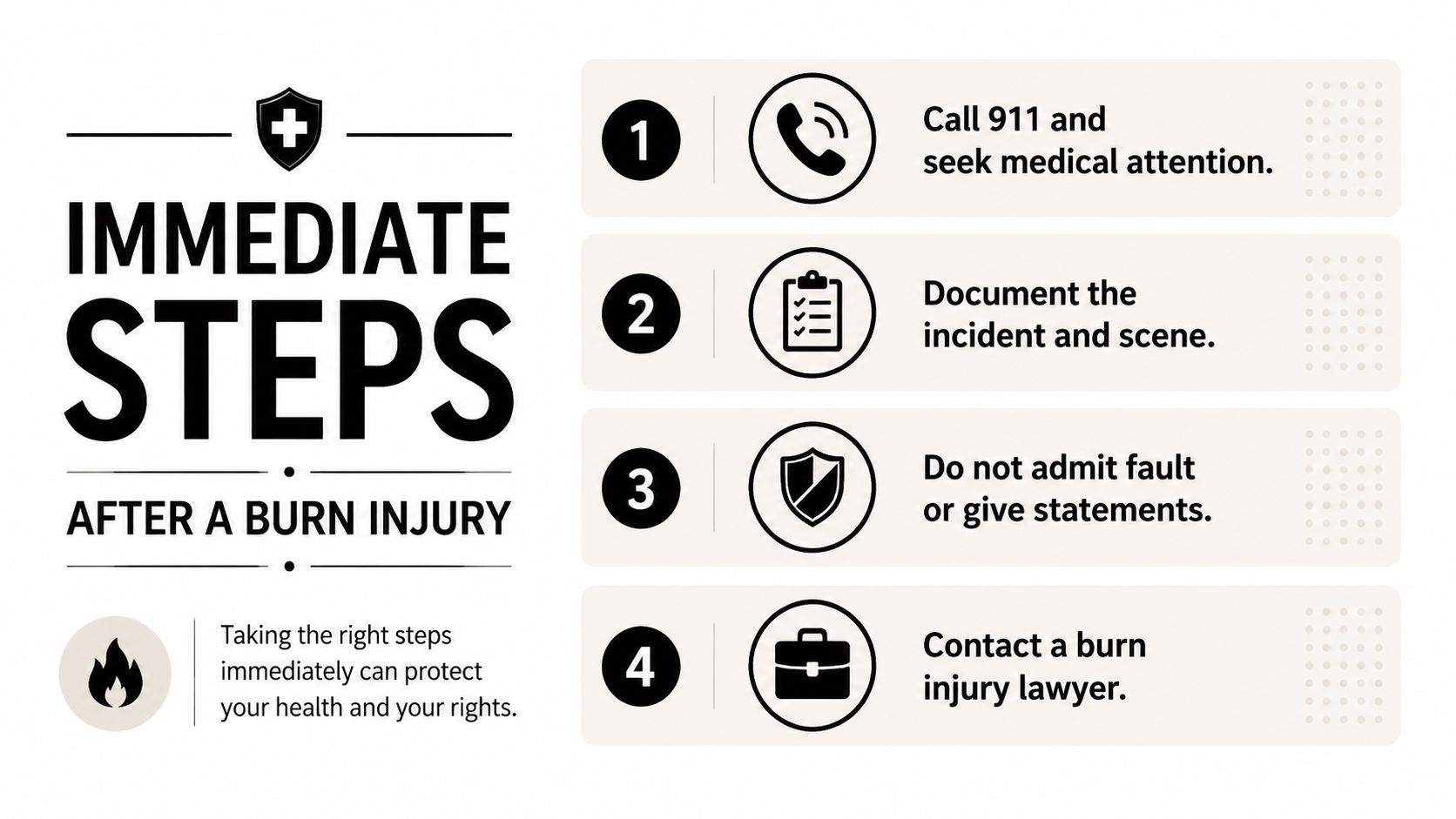
Your health comes first. Legal evidence matters too, but no photograph or document is more important than emergency care. Follow these steps in order, adapting them to your condition and safety.
Start with medical treatment
-
Call 911 for serious injuries. Seek emergency care for extensive burns, electrical injuries, chemical exposure, inhalation concerns, severe pain, or burns involving the face, hands, joints, or sensitive areas. Follow discharge instructions and attend every follow-up appointment.
-
Tell medical providers exactly what happened. Explain whether the injury involved hot liquid, fire, chemicals, electricity, smoke, a vehicle, a product, or workplace equipment. Accurate history helps doctors treat you and helps later establish how the injury occurred.
-
Keep a treatment file. Save discharge papers, prescriptions, therapy notes, appointment records, bills, travel expenses, and work restrictions. Ask providers how to obtain complete records and maintain a simple timeline of symptoms and treatment.
Preserve the scene and physical evidence
If it's safe, photograph the location, the hazard, visible damage, warning labels, equipment, clothing, and surrounding conditions. Don't repair, clean, discard, or alter the product, appliance, vehicle, clothing, or equipment that caused the injury unless safety requires it.
The Texas Department of Insurance advises accident victims to move vehicles to a safe place when possible, photograph vehicles, damage, and the surrounding scene, and record the other driver's insurance details, license, and license plate. It also recommends keeping a detailed record of insurer contacts, including who called and what documents were requested. You can review the department's accident insurance claim documentation guidance for those practical preservation steps.
Be careful with insurance communications
Give basic identifying information and cooperate with reasonable claim processing, but don't speculate about fault. Avoid statements such as “I should have noticed it” or “I'm fine” when you're still being evaluated. Don't give a recorded statement or sign a release before a lawyer reviews the request.
A kitchen scald may involve a defective valve, unsafe container, careless property maintenance, or another cause that isn't obvious at first. A workplace chemical burn may require safety data, training records, equipment inspections, and employer reporting. Early legal review helps prevent important evidence from disappearing.
The following video provides additional general information about accident response:
Practical rule: Preserve the item that caused the burn and the records showing how your injury developed. Those details can matter more than an early insurance description of the accident.
Understanding the Types of Burn Injuries in Texas
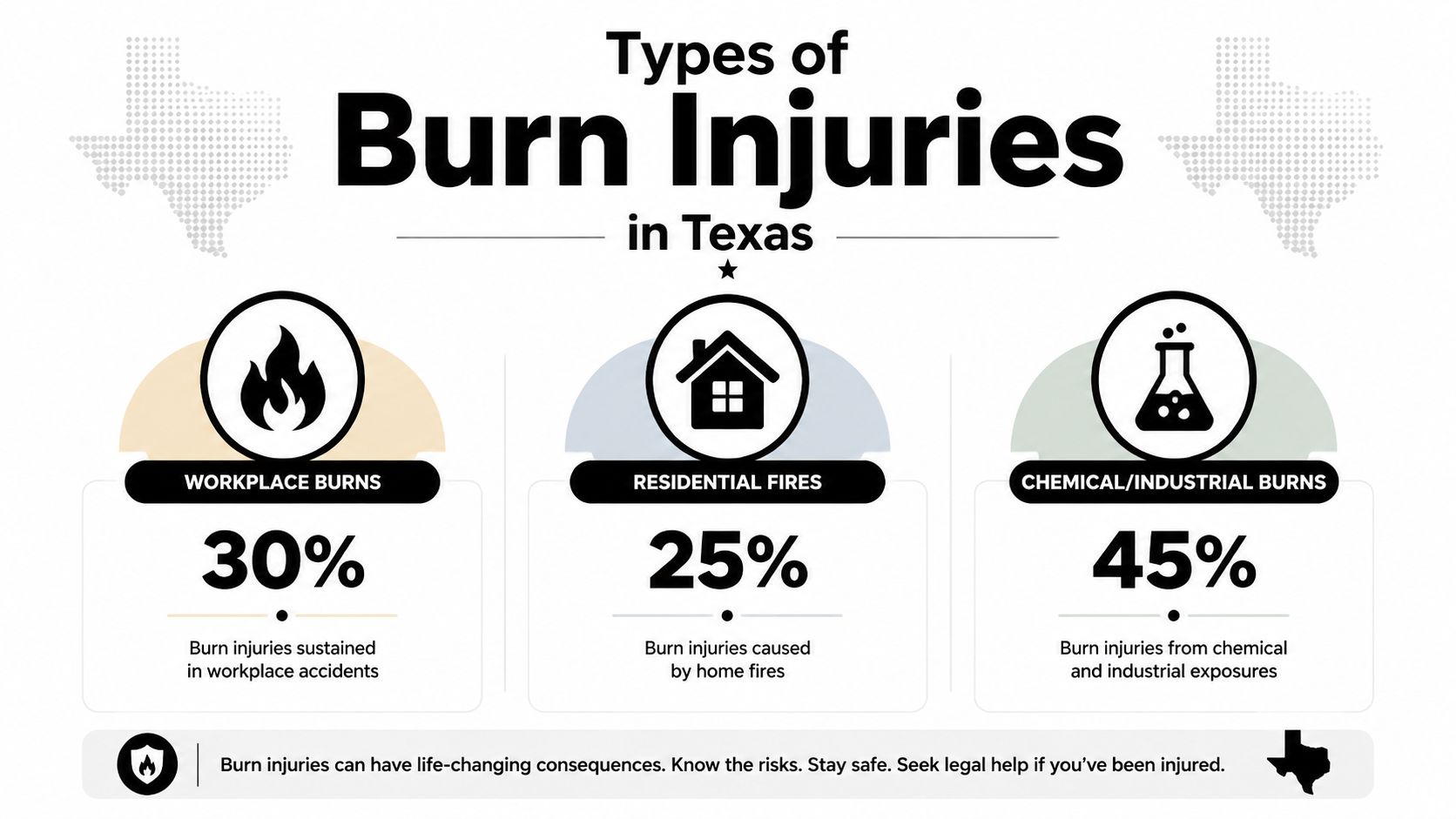
Fire is only one source of serious burn trauma. Texas injury claims also involve scalds, steam, chemicals, electricity, explosions, hot surfaces, and vehicle fires. The cause determines what evidence lawyers must collect and which parties may be responsible.
A Texas third-degree burn dataset covering 2018 through 2022 found that fires represented 34.37% of cases, while hot substances represented 31.25%, according to the University of Texas Rio Grande Valley third-degree burn dataset. The same data identified hands as the most common injured body part. That finding matters because a claim may arise from a restaurant, kitchen, factory, product, or ordinary household event rather than a dramatic structure fire.
The cause changes the investigation
Thermal burns may result from flames, hot equipment, vehicle fires, or explosions. The investigation can involve fire origin analysis, maintenance records, product design, property conditions, and witness testimony.
Scald and steam burns often require close attention to temperature, warnings, container design, plumbing, workplace procedures, and the actions of the person or business controlling the hazard. A hot coffee or boiling-water case can turn on facts that disappear quickly, including the container, liquid temperature, warning label, and surrounding conditions.
Chemical burns require prompt medical care and careful documentation of the substance. Safety data sheets, storage practices, training, protective equipment, and employer records may show whether a workplace or manufacturer failed to protect workers.
Electrical burns can involve current exposure, arc flashes, defective equipment, improper installation, or inadequate barriers. An electrical engineer or safety professional may be needed to determine how the incident occurred and who controlled the dangerous system.
If a refinery or industrial event caused your injury, a lawyer may need to examine contractors, equipment suppliers, employers, and site owners. Related information is available through this Texas refinery explosion injury lawyer resource.
Texas Legal Deadlines and Fault Rules
Texas law gives most injured people two years from the date the cause of action accrues to file a personal injury lawsuit, including many burn injury and negligence claims. The deadline comes from Texas Civil Practice and Remedies Code Section 16.003, summarized in the Texas limitations statute.
That deadline is not a reason to rush medical decisions. It is a reason to contact counsel early. A lawyer may need time to inspect a damaged product, obtain workplace records, identify witnesses, review insurance coverage, and determine whether more than one party contributed to the accident.
Fault must be proved, not assumed
Negligence usually requires evidence of four basic points:
- Duty: The defendant had a legal obligation to act with reasonable care.
- Breach: The defendant failed to meet that obligation.
- Causation: The failure caused the burn injury.
- Damages: You suffered legally recognized losses.
A property owner may have failed to correct a known hazard. A manufacturer may have sold a defective product. A driver may have caused a vehicle fire through negligent conduct. An employer or contractor may have failed to follow safety requirements.
Texas also follows modified comparative responsibility. You may recover if you're not more than 50% at fault, but your recovery is reduced by your percentage of responsibility. If you're found 30% responsible, your damages are reduced by 30%. If you're found 51% responsible, you recover nothing. This rule is discussed further in how comparative fault affects settlement in Texas.
A burn injury doesn't automatically establish liability. The case still needs proof showing who controlled the danger, what they knew, what they failed to do, and how that failure caused your losses.
Settlement timing can also create confusion. For general background on navigating settlement with Outh, remember that settlement discussions don't replace the need to protect the filing deadline. A Texas Personal Injury Lawyer may provide representation for injury victims across Texas on a no-fee-unless-we-win basis.
Calculating the True Value of Your Claim
A burn claim's value depends on the losses supported by evidence, not on how dramatic the accident appears. Two people exposed to similar hazards may have different recoveries because their treatment, work limitations, scarring, prognosis, and future care needs differ.
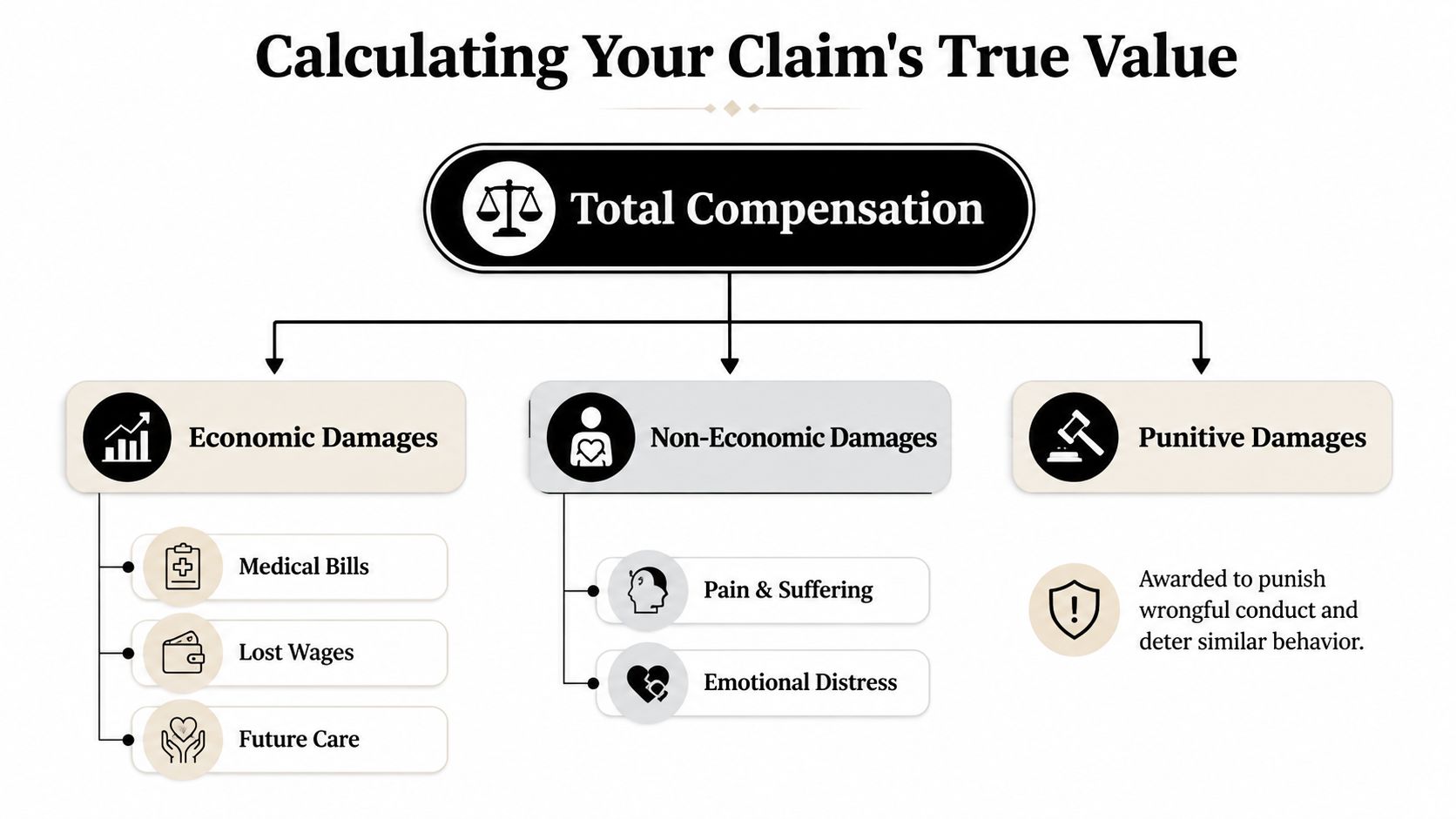
Economic damages may include emergency transport, hospital care, surgery, medication, rehabilitation, lost income, and reduced future earning ability. Severe burns can also involve debridement, skin grafting, reconstructive surgery, scar-management treatment, and continuing therapy. Future losses need medical support, not guesswork.
The Haygood rule changes how bills are evaluated
Texas generally limits recovery of medical expenses to amounts paid or incurred, rather than automatically awarding the full amount originally billed. Texas practice materials discussing the collateral-source and Haygood framework emphasize the importance of reviewing payments, insurance adjustments, and remaining balances.
That means a lawyer should audit the billing history before placing a value on the claim. The review may include:
- Hospital and physician bills: Compare billed amounts with payments and contractual reductions.
- Out-of-pocket expenses: Track deductibles, copayments, prescriptions, supplies, and treatment travel.
- Liens and reimbursement claims: Identify interests asserted by insurers, providers, or benefit programs.
- Future care: Obtain treating physician opinions and reliable cost estimates for expected treatment.
A gross bill can create a misleading expectation. A careful audit identifies the amounts that may be recoverable and prevents settlement negotiations from relying on figures the law may not recognize. The Texas catastrophic injury lifetime-care claim resource provides related information about long-term care planning.
Non-economic losses deserve serious attention
Pain, emotional distress, disfigurement, loss of normal activities, and the effect of visible scarring can be substantial. A claim should document how the injury affects sleep, relationships, work, mobility, confidence, and daily routines.
Punitive damages aren't automatic. They require additional proof beyond ordinary negligence, and they must be evaluated under the facts and applicable Texas law. Your lawyer should separate each damage category and connect it to records, testimony, medical opinions, and practical evidence from your life.
Why You Need a Specialized Burn Injury Lawyer
Burn cases often demand more than a standard accident investigation. A single event may involve a medical team, a product manufacturer, a property owner, an employer, a contractor, an insurance carrier, and multiple witnesses. Each potential defendant may control different evidence.
A qualified lawyer should ask focused questions immediately. Who owned the equipment? Who inspected it? Were warnings provided? Was the chemical labeled and stored correctly? Did a contractor install the electrical system? Did a driver's conduct cause a vehicle fire? Did the employer carry workers' compensation coverage?
Workplace claims require a separate analysis
Texas workplace burns can involve workers' compensation and, in some situations, claims against third parties. State reporting identified 2,990 heat burns and 850 chemical burns among approximately 357,400 nonfatal workplace injuries and illnesses in 2021–2022, according to the Texas Department of Insurance workplace safety case data. The same source notes a 67% increase in fire-related injuries among workers with less than one year of experience in the referenced analysis.
Those figures reinforce a practical point. An injured worker shouldn't assume the employer is the only possible source of recovery. An equipment maker, subcontractor, property owner, or other third party may have separate responsibility. The correct strategy depends on coverage, employment status, safety records, and causation.
Counsel can handle the investigation while you heal
The Law Office of Bryan Fagan, PLLC handles serious injury matters through investigation, witness interviews, evidence preservation, medical coordination, insurance negotiations, and litigation when necessary. The firm's contingency-fee model means clients don't pay attorney fees unless the firm wins, subject to the terms of the representation agreement.
A specialized Texas personal injury lawyer can also coordinate the legal issues created by a related crash. If a Houston roadway collision caused a vehicle fire, you may need a Houston car accident attorney. A commercial vehicle case may require a truck crash lawyer Houston, while a fatal burn incident may require a wrongful death lawyer Texas. These cases shouldn't be treated as simple insurance claims.
Your Path to Recovery Starts Today
You don't need every answer before you ask for help. Start by obtaining medical care, preserving the scene and damaged items, saving every record, and writing down what you remember while the details remain clear. Don't let an insurer pressure you into describing the injury as minor before your doctors understand its full effect.
Texas burn claims may involve negligence, product liability, premises liability, workplace rules, insurance coverage, comparative responsibility, and the paid-or-incurred limit on medical expenses. The legal path becomes more manageable when someone organizes those issues and connects them to your actual losses.
If a loved one died from a burn injury, your family may have a separate wrongful death claim involving medical costs, lost support, and the personal losses caused by the death. If the injury permanently affects work or daily life, catastrophic injury counsel can help evaluate future care and earning losses.
You're allowed to focus on healing while a lawyer investigates responsibility and protects your rights. A consultation can help you understand deadlines, potential defendants, available insurance, and the evidence your case needs.
The Law Office of Bryan Fagan, PLLC offers free consultations and contingency-fee representation for Texas burn injury victims and families, so you can discuss your accident without paying attorney fees unless the firm wins. Visit Law Office of Bryan Fagan, PLLC to request a consultation and take the first step toward protecting your health, evidence, and financial recovery. Recovery is possible, and legal help is available.