
A serious accident can change your life in seconds, but you don't have to face it alone. Maybe you're sitting at home after a collision on Highway 288, dealing with pain, medical appointments, and calls from an insurance adjuster. Maybe your family is grieving after a fatal crash and trying to understand what comes next. A car accident lawyer in Pearland, TX can help protect your rights while you focus on healing.
Texas roads continue to produce life-changing injuries. In 2024, the state recorded 4,150 motor vehicle traffic deaths, 251,977 injuries, and one reportable crash every 57 seconds, according to TxDOT's motor vehicle crash statistics. Those figures don't determine the value of your case, but they show why prompt medical care, evidence preservation, and legal guidance matter.
Life After a Pearland Car Crash
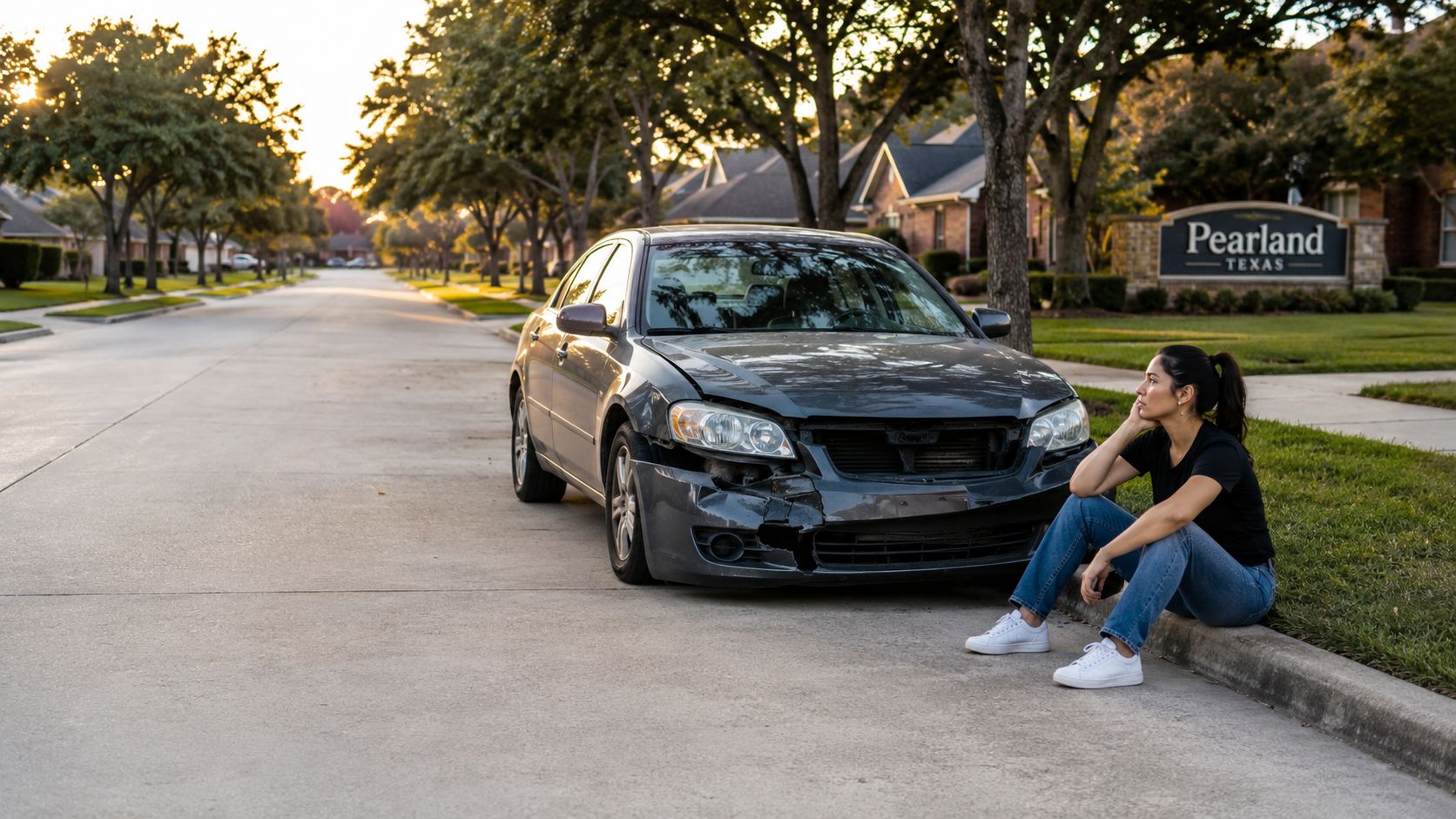
A woman leaves work and drives home through Pearland. Traffic is moving heavily near Broadway, and another driver turns across her path. The impact leaves her shaken beside a damaged car. Her neck and back hurt, but the larger problem arrives later, when medical bills begin to accumulate and the other driver's insurer asks for a recorded statement.
That situation is common after a serious collision. You may be dealing with pain, missed work, vehicle damage, anxiety, and uncertainty about who will pay. If symptoms include pelvic pain after a crash, prompt medical evaluation can help identify the injury and create a record connecting it to the collision.
The Law Office of Bryan Fagan, PLLC helps injured people and families understand their options under Texas law. A lawyer can investigate how the crash happened, identify available insurance, organize medical evidence, and communicate with adjusters who may try to minimize your losses. That support is especially important when the crash involves distracted driving, a commercial vehicle, a rideshare driver, or an uninsured motorist.
What the first few days may involve
You should report the crash, obtain medical care, preserve photographs and records, and avoid statements that guess about fault. You don't need to have every answer before speaking with a lawyer. In fact, early advice can prevent avoidable mistakes while evidence is still available.
Texas recorded 4,150 traffic deaths in 2024, down from 4,291 in 2023, but the state still averaged one traffic death every 2 hours and 7 minutes and one injury every 2 minutes and 5 seconds, according to TxDOT's 2024 crash report. Behind every entry is a person facing consequences that may last for months or years.
Recovery may include treatment, physical therapy, time away from work, and legal action. You deserve clear answers and a plan built around your actual injuries, losses, and family needs.
Immediate Steps to Protect Your Claim
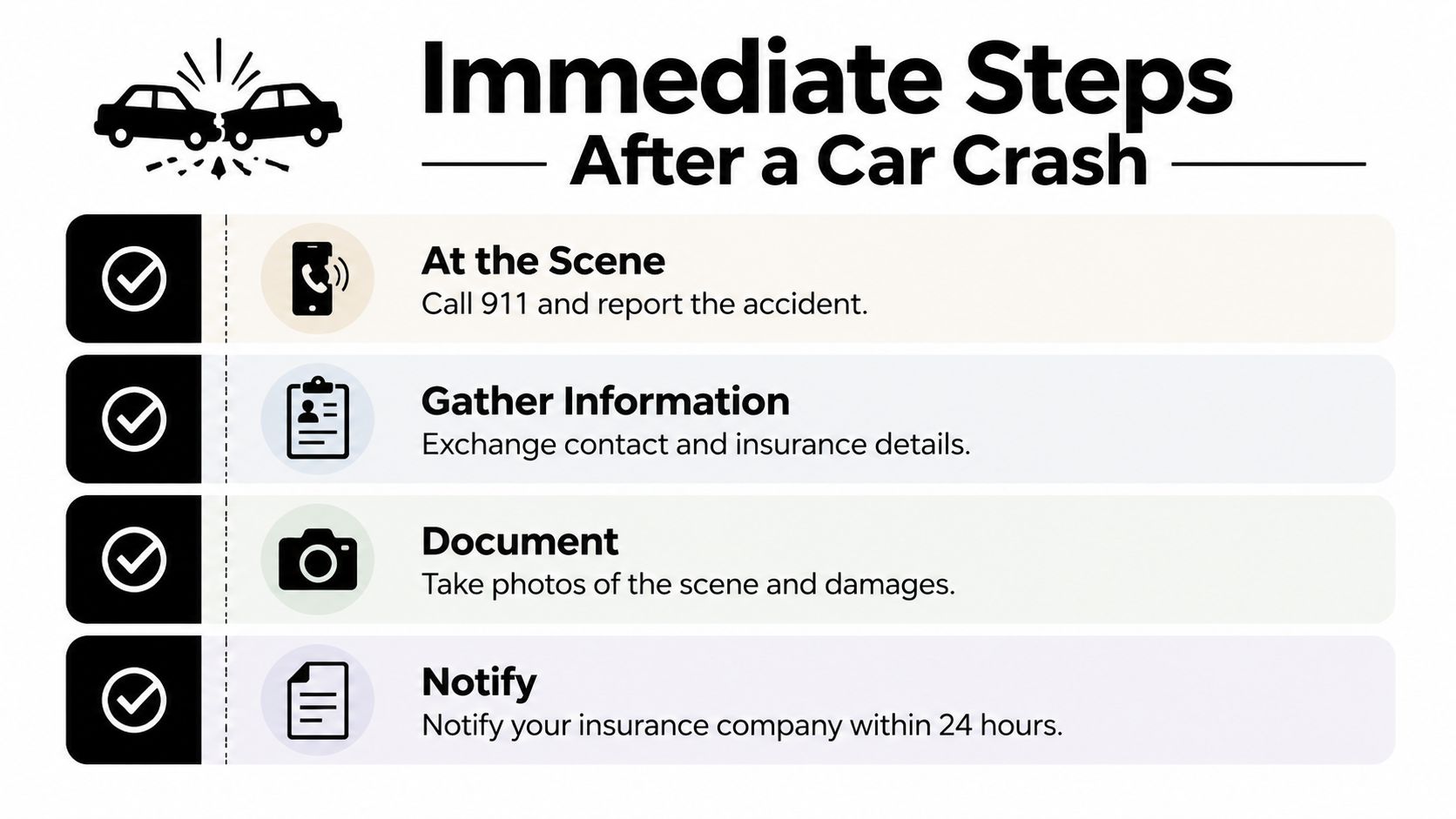
The first hours after a crash can affect both your health and your legal claim. Follow this order whenever you can do so safely.
Start with safety and medical care
Call 911: Report the collision and request emergency assistance. Tell the responding officer about visible injuries and symptoms, but don't guess about what caused the crash.
Move only when necessary: If remaining in the roadway creates a danger, follow emergency instructions and move to a safe location. Don't argue with the other driver or try to repair the scene.
Get medical attention: Pain may develop or worsen after the initial shock fades. See a doctor or emergency provider promptly, follow treatment instructions, and keep every bill, prescription record, and appointment note.
Record symptoms clearly: Tell medical professionals about every affected area, including headaches, neck pain, numbness, emotional distress, or difficulty sleeping. A symptom that seems minor can still matter to your treatment and claim.
Preserve proof before it disappears
If you can safely use your phone, photograph the vehicles, roadway, traffic signals, debris, weather conditions, and visible injuries. Gather names and contact information for witnesses, and save the other driver's license and insurance details. Ask nearby businesses or property owners whether cameras may have captured the collision, because video systems can overwrite footage.
TxDOT reported that speed contributed to 1,466 fatalities in 2024, while DUI-related crashes caused 1,401 fatalities. Unrestrained occupants accounted for 1,070 fatalities, and pedestrian deaths totaled 765, according to TxDOT safety presentation data. Those causes can affect what evidence matters, from phone records to surveillance video and vehicle data.
Practical rule: Save original photographs and messages. Don't edit the files or rely only on social media uploads.
Handle insurers carefully
Notify your own insurer as required by your policy, but keep your statement factual and brief. You don't have to speculate about speed, visibility, injuries, or fault. Avoid signing a release or accepting a settlement before you understand the full extent of your medical needs.
For a broader checklist, review what to do after a car accident in Texas. The Car Accident Lawyer in Texas service provides representation for drivers and passengers injured in Texas car accidents.
If the crash involved texting, preserve any message or call information you already possess and tell your lawyer what you observed. Texas recorded 86,384 distracted-driving crashes in 2025, causing 2,437 serious injuries and 299 deaths, according to TxDOT's distracted-driving fact sheet. A distracted-driving claim may require phone records, dashcam footage, witnesses, scene photographs, and a police report that identifies distraction.
Understanding Texas Fault and Negligence Laws
Texas generally requires an injured person to prove that another party acted negligently and caused the injury. In a Pearland collision, that may involve showing that a driver failed to use reasonable care by speeding, following too closely, changing lanes unsafely, driving while impaired, or looking at a phone.
The insurance company may tell a different story. Adjusters often look for facts that support shared responsibility, such as a disputed traffic signal, a delayed medical visit, or an allegation that you could have avoided the impact. Your lawyer's job is to test those allegations against photographs, vehicle damage, witness accounts, medical records, and other available evidence.
How comparative responsibility changes recovery
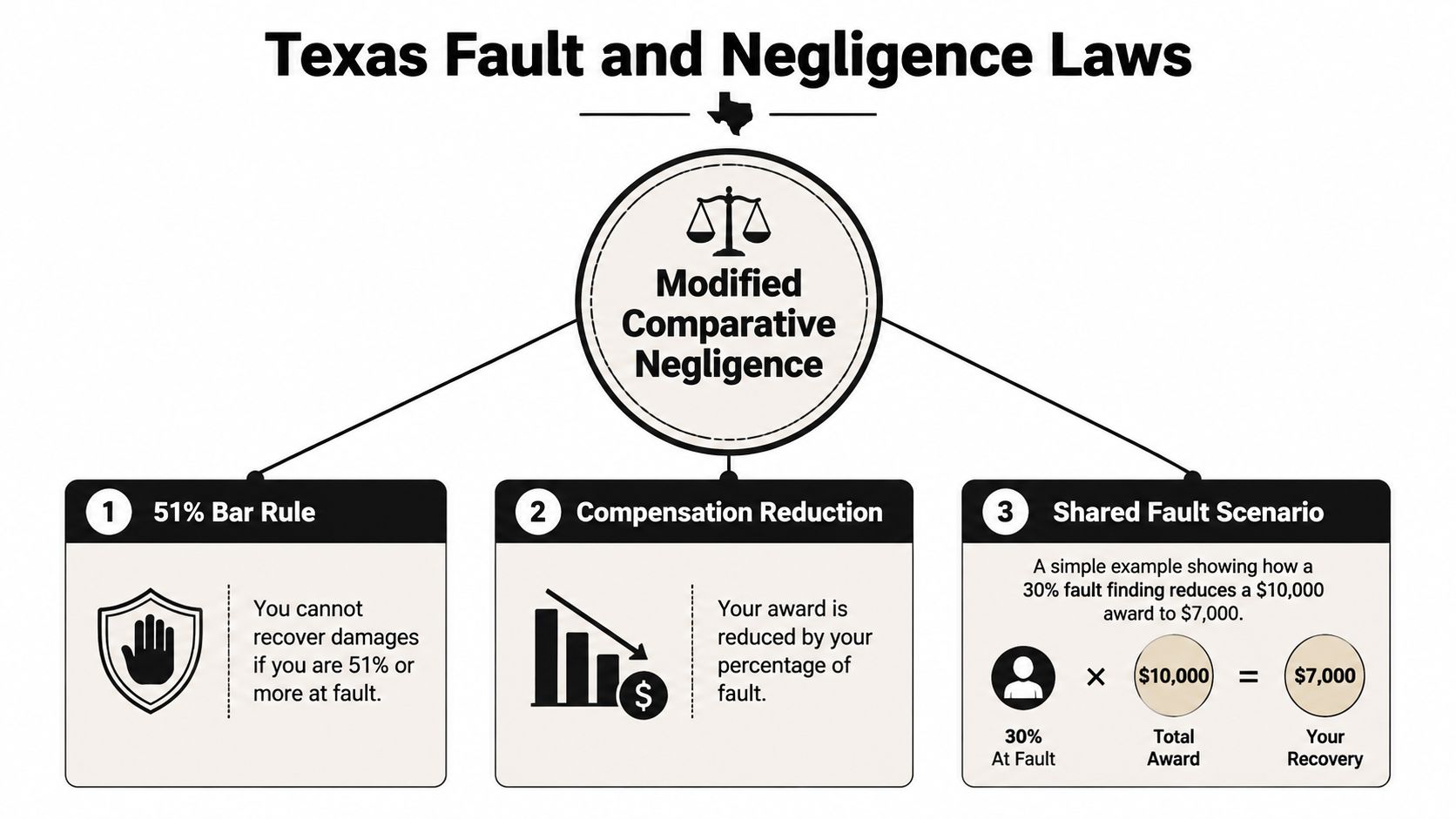
Texas follows a modified comparative responsibility rule. Under Texas Civil Practice and Remedies Code Chapter 33, you may recover damages if you're found 50% or less responsible, but your award is reduced by your percentage of fault. If your responsibility is greater than 50%, recovery is barred.
For example, assume a jury finds that your damages total $10,000 and assigns you 30% responsibility. Your recoverable amount would be $7,000. If the evidence supports a finding that the other driver caused the collision while you contributed only a minor amount, the allocation of fault becomes central to the case.
A crash on Highway 288 might involve several questions at once. Was the other driver speeding? Did a lane change cut off traffic? Was a phone in use? Did road conditions affect visibility? A careful investigation separates assumptions from proof.
Why the filing deadline matters
Most Texas personal injury lawsuits must be filed within two years of the crash under Texas Civil Practice and Remedies Code § 16.003(a), as shown in the Texas statute. The deadline can be affected by the facts, and claims involving governmental entities may have shorter notice requirements. Insurance policies may also contain contractual deadlines that differ from the lawsuit deadline.
Waiting creates practical problems even before the deadline arrives. Witnesses may become difficult to locate, video may be deleted, vehicles may be repaired, and medical records may fail to explain how symptoms developed. Read more about how comparative fault affects a Texas settlement, but don't treat general information as a substitute for advice about your specific claim.
After a Houston freeway crash, for example, a driver may remember only a sudden lane change and a hard impact. Early photographs, witness contact information, vehicle inspections, and medical documentation can provide the details that memory cannot.
Recoverable Damages and Insurance Realities
A settlement should reflect the full effect of the injury, not just the first hospital bill. Texas claims may include economic damages, such as medical expenses and lost income, and non-economic damages, such as physical pain, emotional distress, and the loss of normal activities. Serious injuries may also require an evaluation of future treatment and reduced ability to earn.
| Damage Type | Description | Examples |
|---|---|---|
| Medical expenses | Costs connected to accident-related treatment | Emergency care, physician visits, therapy, medication |
| Lost income | Financial loss caused by missed work or reduced capacity | Missed wages, work restrictions, diminished earning ability |
| Pain and suffering | Physical and emotional effects of the injury | Ongoing pain, anxiety, sleep disruption, loss of enjoyment |
| Future care | Reasonably supported needs that may continue | Rehabilitation, follow-up treatment, assistive services |
| Property damage | Loss involving the vehicle or personal property | Repair, replacement, damaged belongings |
| Wrongful death losses | Harm suffered by eligible family members after a fatal crash | Funeral expenses, lost support, loss of companionship |
The available insurance may not match the size of the loss. Texas requires minimum auto liability coverage under the 30/60/25 standard, meaning $30,000 for bodily injury per person, $60,000 for bodily injury per accident, and $25,000 for property damage per accident, according to the stated Texas insurance requirements. A serious injury can exceed those limits quickly.
The importance of UM and UIM coverage
If the at-fault driver has no insurance, uninsured motorist coverage may provide a path to compensation through your own policy. If the driver has insurance but not enough to cover the loss, underinsured motorist coverage may apply. These are first-party claims, and your own insurer may still examine fault, medical causation, policy terms, and the value of your damages.
Don't assume your insurer will automatically pay everything available. Review the declarations page, policy endorsements, and claim correspondence. A lawyer can identify whether other policies may apply, including coverage connected to an employer, commercial vehicle, or rideshare activity.
Fatal and catastrophic injuries
When a crash causes permanent disability, a traumatic brain injury, spinal injury, or death, the claim requires more than a quick calculation of current bills. Families may need a wrongful death lawyer in Texas to address funeral expenses, lost financial support, companionship, and the long-term effect of the loss. A truck collision may also require a Truck Accident Lawyer in Texas because commercial vehicle records and insurance arrangements can complicate liability.
Choosing the Right Pearland Car Accident Lawyer
Choose a lawyer who will investigate the facts instead of forwarding an insurance offer. Ask who will handle your case, how the firm preserves evidence, whether it can pursue an uninsured or underinsured motorist claim, and how it evaluates future medical needs.
A contingency-fee arrangement generally means you don't pay attorney's fees unless the firm recovers compensation for you. The written agreement should explain attorney fees, litigation expenses, medical liens, and any costs that could be deducted from a recovery. Read it carefully and ask questions before signing.
Questions worth asking at the consultation
- Evidence: What evidence should be preserved now, including phone records, video, vehicle data, and witness information?
- Fault: How might the insurer argue that I share responsibility, and what facts answer that argument?
- Coverage: Could my uninsured or underinsured motorist policy apply?
- Damages: How will the claim account for treatment, missed work, pain, and future care?
- Process: Will the case likely involve negotiation, litigation, or both?
The guide to choosing a personal injury attorney offers useful questions for comparing firms. Local familiarity can help, but experience with evidence, insurance disputes, and courtroom preparation matters more than a convenient office location.
The Law Office of Bryan Fagan, PLLC represents Texas clients in motor vehicle and serious injury matters, including car accidents, truck collisions, wrongful death, catastrophic injuries, and uninsured or underinsured motorist disputes. The firm offers free consultations and contingency-fee representation, allowing you to discuss your situation before deciding how to proceed.
If your crash involved a commercial vehicle, you may also want a truck crash lawyer in Houston who understands the records and insurance layers that can arise in a trucking case. If a family member died, seek advice from a wrongful death lawyer in Texas before signing an insurance release.
Your Path to Recovery and Justice
A strong claim usually begins with a prompt investigation. Your lawyer gathers the crash report, photographs, witness information, medical records, wage documentation, insurance policies, and evidence related to distracted, impaired, or unsafe driving.
The next step is presenting a demand supported by the facts and the full scope of your losses. Many cases resolve through negotiation, but filing a lawsuit may be necessary when the insurer refuses to offer fair compensation. Your attorney should prepare the case as though trial is possible, even while pursuing settlement.
You can help by following medical advice, keeping records, avoiding public comments about the crash, and forwarding insurer communications to your lawyer. Families facing a fatality or catastrophic injury deserve time to grieve and heal without carrying every legal burden alone.
Recovery won't erase what happened, but it can help pay for treatment, replace lost income, and protect your family's future. Legal help is available, and you don't have to make these decisions without guidance.
The Law Office of Bryan Fagan, PLLC offers free consultations and contingency-fee representation for Pearland car accident, truck crash, wrongful death, catastrophic injury, and uninsured motorist claims. Contact the Law Office of Bryan Fagan, PLLC to discuss the evidence, insurance coverage, deadlines, and compensation options in your case.


