You're probably reading this while you're sore, missing work, and wondering why an insurer keeps talking about car repairs when you can't sleep, turn your head comfortably, or drive without feeling anxious. That's the gap this guide explains. A pain and suffering car accident claim in Texas isn't about the first bill alone. It's about documenting how the crash changed your body, your mood, and your daily life.
Why Pain and Suffering Matters After a Texas Crash
A serious accident can change your life in seconds, but you don't have to face it alone. After a Houston freeway crash, you might walk away thinking you're lucky, then wake up the next morning with a stiff neck, a pounding headache, and a racing heart every time you hear brakes. That second day is often when the impact begins to show.
You're not unusual for feeling overwhelmed by what follows. Texas recorded 4,150 deaths in motor-vehicle traffic crashes in 2024, and 251,977 people were injured that same year, according to the Texas Department of Transportation 2024 crash summary. Behind those totals are people facing surgery, rehabilitation, follow up visits, missed paychecks, and months of uncertainty.
What Changes After the Tow Truck Leaves
The emergency room visit is only one part of the story. You may need help getting dressed, lifting your child, sitting through a workday, or driving to appointments. Pain can interrupt sleep, and poor sleep can make concentration, patience, and healing harder the next day.
That's why early, consistent care matters for both your health and your record. If neck symptoms start after a rear end impact, learning about conservative care for collision-related neck pain can help you ask better questions at your next appointment. Tell your provider what hurts, where it hurts, and what you can no longer do comfortably, even if the symptom seems small.
- Physical limits: You can't turn, bend, lift, or sit the way you could before.
- Emotional strain: You feel anxious in traffic or avoid driving altogether.
- Lost routines: You miss family events, exercise, hobbies, or ordinary household tasks.
A useful starting point: Write down, in plain words, one thing the crash took from your normal day. That simple note often explains your claim better than a stack of bills alone.
Pain and suffering matters because Texas law recognizes that harm isn't limited to receipts. If you document the less visible effects early, you give any Houston car accident attorney or insurer a clearer picture of what recovery requires from you.
What Pain and Suffering Covers in Texas
Think of your losses like an iceberg. Medical bills and car repairs sit above the water where everyone can see them. Much of the harm from a crash sits below the surface, where it affects how you move, sleep, think, and spend time with people you love.
The illustration below shows that split between visible costs and hidden impact.
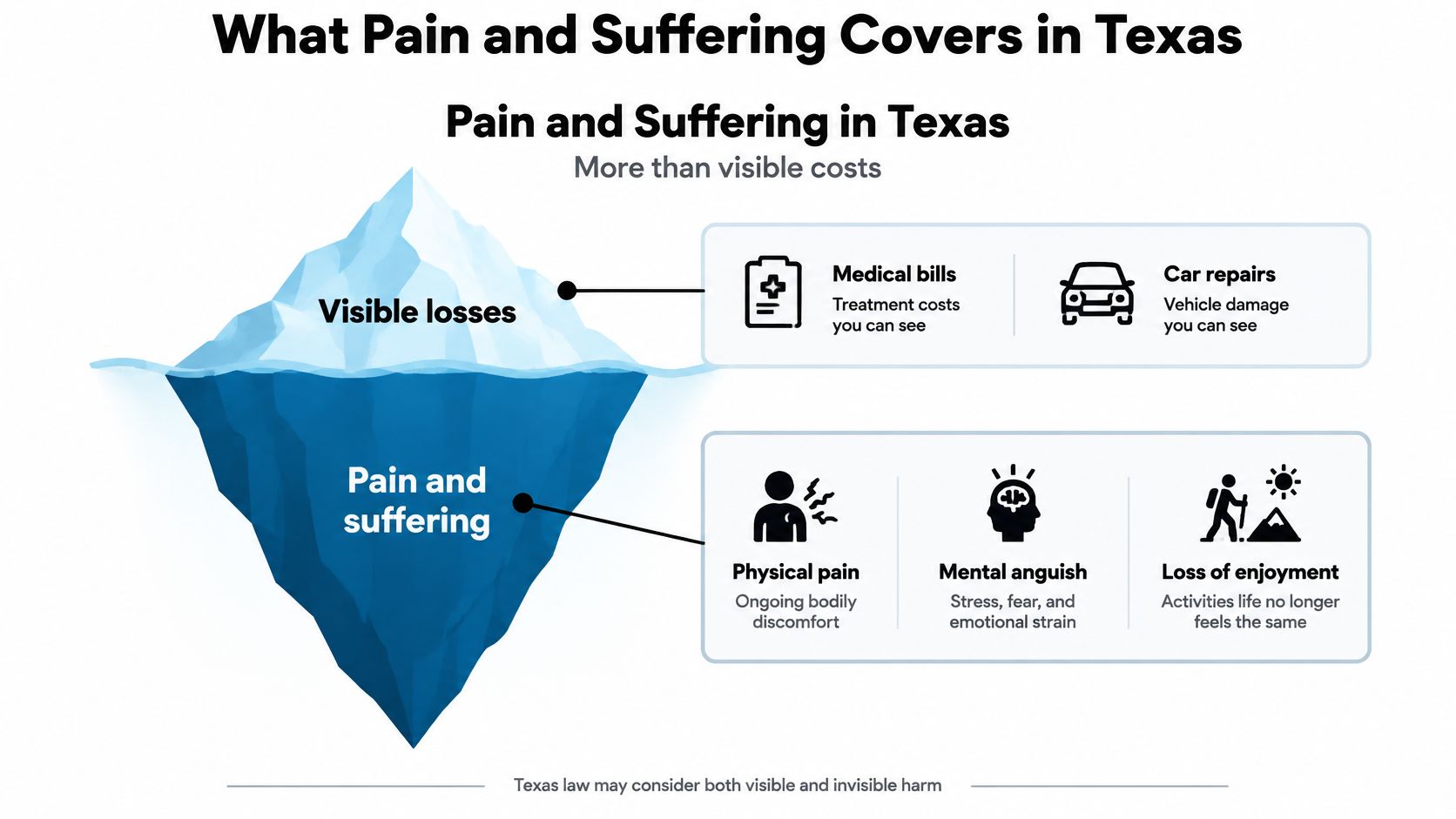
In Texas, pain and suffering is a form of noneconomic damages, not a reimbursement for a hospital invoice. The statutory definition includes physical pain and suffering, mental or emotional anguish, physical impairment, disfigurement, loss of enjoyment of life, inconvenience, and loss of companionship or society, as set out in the Texas Civil Practice and Remedies Code chapter on damages definitions. Each category deserves its own description, because saying only that you hurt doesn't explain how your life changed.
The Categories In Everyday Language
Physical pain is the ache, sharp pain, stiffness, or nerve symptoms you feel during treatment and recovery. A parent who can't play catch, carry groceries, or get down on the floor with her children is also describing physical impairment and loss of enjoyment, not pain alone. Those are related losses, but they aren't identical.
Mental anguish can include fear, anxiety, grief, sleep disruption, and intrusive memories of the impact. An NIH supported AURORA study followed more than 3,000 people for up to one year after traumatic events, including car accidents, and found particular brain response profiles were associated with higher PTSD and anxiety symptoms at follow up, according to the National Institutes of Health summary of post trauma brain activity research. You don't need a formal diagnosis on day one to report symptoms promptly.
- Disfigurement: Scarring or a visible change that affects confidence or daily interaction.
- Inconvenience: Repeated appointments, travel for care, and dependence on others for rides or chores.
- Loss of companionship: Less time, closeness, or shared activity with a spouse or family member.
Why Texas Keeps The Two Piles Separate
Economic losses, such as medical expenses and lost earnings, come with bills and pay records. Noneconomic losses need a different kind of proof, built from medical notes, your own symptom journal, and observations from family or coworkers. Our explainer on economic damages compared with non-economic damages in Texas walks through that distinction in more detail.
When you present the two piles separately, a decision maker can judge past and future suffering on its own evidence. That clarity helps prevent your daily limitations from being treated as an afterthought to the repair estimate.
How Fault and Comparative Responsibility Affect Your Claim
Many people ask the same worried question: What if I made a mistake too? In Texas, being partly responsible doesn't automatically end your claim. What matters is how responsibility is divided after the evidence is reviewed.
A short consultation often helps people see where fault, evidence, and damages fit together.

Negligence means someone failed to use reasonable care and that failure caused harm. Running a red light, following too closely, driving while distracted, or failing to yield can all support a negligence claim when the facts prove the connection. You still need evidence linking that careless act to your injuries, not just a damaged vehicle.
The Texas Fifty Percent Line
Texas uses modified comparative responsibility. Under Texas Civil Practice and Remedies Code section 33.001 on comparative responsibility, you may not recover damages if you're found more than 50% responsible for the harm. If you're 50% or less responsible, your recoverable damages are reduced by your percentage.
Here's the example many families find easiest to follow. After a Houston freeway crash, a jury finds $100,000 in total damages but assigns you 20% responsibility and the other driver 80%, using those same statutory figures. Your award would generally be reduced to $80,000, because your share is subtracted first.
That math explains why scene evidence carries so much weight. Photographs, the crash report, witness statements, vehicle damage, and road conditions can all influence the percentages. You can read more in our guide to comparative negligence rules in Texas injury claims, especially before you guess about fault in a recorded statement.
The video below offers another plain language walkthrough you can review with a family member before speaking with an adjuster.
Don't apologize or speculate at the scene to be polite. Stick to what you saw, felt, and know, and let the documents and witnesses help establish the fuller picture.
How Non-Economic Damages Are Calculated in Practice
After a crash, you might have medical bills and missed work, yet still struggle to describe the nights you cannot sleep or the activities you have stopped enjoying. Texas has no price list for those losses. A lawyer or insurer may propose a number, but no single formula determines the value of every claim.
Valuation methods provide a starting point. The evidence then helps show how the injury affected your daily life, how long those effects lasted, and whether they are expected to continue. A dated note about anxiety before driving, for example, can make a less-visible effect clearer than a general statement that you feel different.
Three Common Approaches Side By Side
| Method | How It Works | Evidence It Relies On | When It Tends to Fit |
|---|---|---|---|
| Multiplier method | Ties the estimate to your economic losses | Bills, wage loss, diagnosis, treatment length | Cases where treatment costs reflect injury severity |
| Per diem method | Assigns a daily value for pain and limitations | Symptom journal, recovery timeline, work restrictions | Cases with a clear day to day recovery period |
| Case specific evaluation | Weighs severity, duration, and life impact together | Provider opinions, family testimony, activity records | Lasting, complex, or less visible injuries |
The multiplier method may understate harm when treatment was conservative but symptoms continued. The per diem method can be easier to picture, though it relies on a credible record of daily effects. A case-specific evaluation takes more work and may better fit chronic pain, anxiety, or lasting limits.
A formula can start a conversation, but your records are what make the number believable to someone who wasn't living in your body after the crash.
Past Pain And Future Pain Are Both Part Of The Picture
Valuation considers both what you have already endured and what providers expect you may face. If a doctor anticipates future therapy, medication, activity limits, or flare-ups, ask that outlook to be documented before settling. Otherwise, a settlement reached before the future effects are reasonably clear may leave some suffering uncompensated.
Mental health care can support recovery and help document how pain and anxiety affect one another. If your provider discusses cognitive behavioral approaches, resources that explain how to retrain your brain to manage pain may help you understand the treatment conversation. For your claim, consistent reporting, follow-through, and notes connecting symptoms to the crash help show the effect over time.
A Texas personal injury lawyer doesn't invent a value from thin air. For example, a dated journal entry showing you missed your daughter's soccer tournament, paired with a note from her coach, can support a loss-of-enjoyment claim more clearly than a medical bill alone.
Protecting Your Claim After a Texas Crash
What you do in the first hours can protect both your safety and your ability to prove what happened later. You don't need to do everything perfectly while you're shaken. Focus on the sequence, one step at a time.
The process below gives you a simple order to follow when you're able.
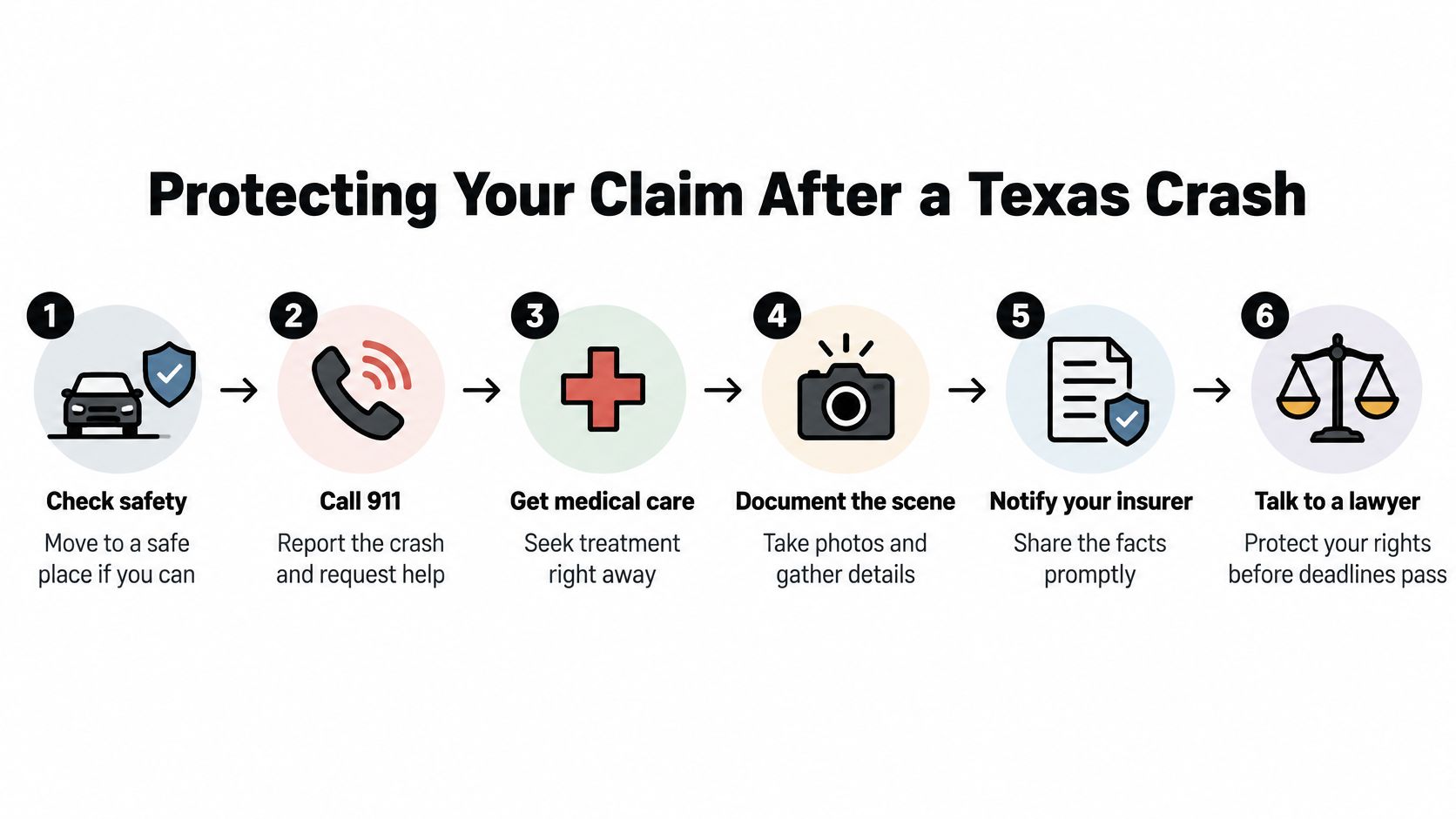
First, check for injuries and move a vehicle out of traffic when it's safe and possible. Exchange names, addresses, phone numbers, vehicle identification and license plate numbers, insurance information, and driver license information, following the Texas Department of Transportation guidance on what to do after a collision. Record the location and get witness contact details before people leave.
Call police when someone is injured or killed, vehicles can't be moved, intoxication is suspected, a driver has no insurance, or someone leaves the scene. Take photographs when it's safe, and notify your insurer promptly. Those early records connect the impact, the damage, and your first symptoms in one timeline.
Build The Record During Recovery
After a truck sideswipes an SUV on a Houston freeway, photos of lane positions, debris, traffic, and both vehicles may help explain fault and force of impact. Your later records do the same work for pain. Together, they show cause, severity, and duration instead of asking anyone to take your word alone.
- Get checked promptly: Seek care the same day when you can, and return if symptoms appear or worsen later.
- Keep a daily journal: Note pain intensity, sleep, medication effects, missed activities, and driving anxiety.
- Save work records: Keep notes on missed shifts, reduced duties, and accommodations you needed.
- Preserve family observations: Ask relatives to note changes they've seen in mobility, mood, or household participation.
- Follow referrals: Attend rehabilitation, follow up, or behavioral health appointments your providers recommend.
Be careful with social media while you recover. A smiling photo at a birthday dinner doesn't prove you felt well, but an adjuster may still use it to question your limitations. It's safer to keep recovery details private and let your medical record speak consistently.
Texas filing deadlines, often called the statute of limitations, also limit how long you have to act. Missing an applicable deadline can prevent recovery, so don't let evidence gathering drift while you wait to feel certain. Ask about your deadline early, while witnesses and records are still available.
Dealing With Insurers and Uninsured Motorist Coverage
An adjuster may sound friendly, organized, and eager to close your file. Remember who employs that adjuster. The insurer's job is to evaluate and limit what it pays, while your job is to understand your injuries before you give up rights.
Be especially careful with recorded statements and quick offers. A casual comment that you're fine, made while you're still sore and unsure, can be used later to dispute ongoing pain. You can provide basic facts without guessing about fault, diagnosis, or when you'll fully recover.
When The Other Driver Cannot Pay Enough
Sometimes the hardest question isn't who caused the crash. It's which policy can pay for the harm. That problem arises after hit and run crashes, catastrophic injuries, and collisions where the at-fault driver carries no insurance or too little insurance.
Uninsured and underinsured motorist coverage, often called UM or UIM, may help in those situations. Texas insurers must offer this coverage when auto insurance is purchased, and a policyholder who doesn't want it generally must reject it in writing, according to the Texas Department of Insurance consumer guide to commercial auto coverage rights. Depending on the policy, it may cover medical bills, repairs, rental expenses, diminished value, and pain and suffering damages.
- Check your declarations page: Confirm whether you bought UM or UIM coverage and what endorsements apply.
- Report a hit and run to police: Failing to make that report can prevent payment for the hit and run claim.
- Pause before settling: A liability settlement or signed release can affect a later underinsured motorist claim.
Our overview of uninsured and underinsured motorist coverage in Texas explains how your own policy may become central when the other driver's coverage falls short. Bring the full policy, not just the insurance card, when you ask for a review.
Coverage questions also affect treatment decisions, including counseling after a traumatic crash. Some families need to review insurance options for psychiatric care while they sort out referrals and payment. Don't skip recommended mental health care without asking what coverage or documentation options exist.
Before you sign: Ask whether the release ends every claim, including future treatment and UM or UIM rights. Once you sign a full release, you generally can't reopen the claim because symptoms lasted longer than expected.
Choosing the Right Texas Personal Injury Lawyer for Your Next Step
You can handle many early tasks yourself, such as getting care, saving photos, and keeping a journal. The harder work begins when fault is disputed, symptoms persist, coverage is layered, or an insurer treats your suffering as minor because the vehicle damage looks modest. That's where structured legal help changes what you have to carry alone.
A lawyer can gather records, interview witnesses, communicate with adjusters, and present economic and noneconomic losses separately. That organization matters in a pain and suffering car accident claim because the evidence comes from many places. Your journal, provider notes, wage records, and family observations need to tell one consistent story.
What To Look For In A First Conversation
Ask how the firm evaluates less visible harm, who will handle insurer calls, and what records you should bring. Ask about fees in plain terms, including what happens if no money is recovered. You should leave understanding the next step, not feeling pressured to decide while you're in pain.
For representation for drivers and passengers injured in Texas car accidents, you can review our Car Accident Lawyer in Texas page before your consultation. Families facing a fatal crash have different questions about standing and damages under the Texas wrongful death statute for deaths caused by wrongful acts, so they should speak with a wrongful death lawyer Texas families can question directly about the process. A commercial vehicle case may likewise require a truck crash lawyer Houston drivers can ask about carrier records, employer responsibility, and evidence preservation.
The Law Office of Bryan Fagan, PLLC serves Houston, Dallas-Fort Worth, Austin, San Antonio, and surrounding communities in car, truck, motorcycle, pedestrian, rideshare, wrongful death, and catastrophic injury cases. The firm offers free consultations and contingency fee representation, meaning no attorney fees unless the firm recovers money for you. That structure lets you get answers about coverage, deadlines, and documentation before deciding how to proceed.
Recovery is possible, even when progress feels slow and uneven. You don't have to prove every hard day from memory or negotiate while you're trying to heal. With prompt care, a clear record, and guidance from a Texas personal injury lawyer, you can take the next step with more confidence and support.
If pain, anxiety, sleep problems, or lost routines are still shaping your life after a Texas crash, the Law Office of Bryan Fagan, PLLC can review your evidence, insurance coverage, and filing deadlines during a free consultation. You pay no attorney fees unless the firm recovers money for you, so you can get clear next steps before signing an insurer's release. Visit Law Office of Bryan Fagan, PLLC to schedule your consultation and start protecting your claim today.