
Most physical-injury settlements in Texas are not federally taxable under IRC Section 104(a)(2), and Texas has no state income tax on settlements. The key question is which parts of the award, such as punitive damages, interest, or previously deducted medical expenses, might still trigger federal taxes.
A serious accident can change your life in seconds, but you don't have to face the aftermath alone. You may be dealing with medical bills, missed work, insurance calls, and a settlement offer that looks confusing even before you ask, “Do you pay taxes on injury settlement Texas?”
The short answer is reassuring. Compensation connected to personal physical injuries or physical sickness is generally excluded from federal gross income under IRS guidance on settlements and judgments. Texas also has no personal income tax, so the state won't take a separate income-tax share of your settlement.
That doesn't mean every dollar automatically receives the same treatment. Punitive damages, interest, and reimbursement for medical expenses that produced a prior tax benefit can be taxable. The wording of your settlement agreement matters, too. If the agreement clearly identifies what each payment compensates, your lawyer and tax professional have a stronger basis for reporting the recovery correctly.
A Quick Answer for Texas Accident Victims
If your settlement compensates you for a broken bone, spinal injury, burns, disability, or another physical injury, the recovery will usually be federally tax-free. Internal Revenue Code Section 104(a)(2) excludes damages received because of personal physical injuries or physical sickness from gross income. Texas adds another layer of protection because it has no personal income tax on settlement proceeds.
That's welcome news when you're already worried about how much of the settlement will remain after medical liens, attorney fees, and other obligations. Still, you shouldn't treat the entire check as automatically tax-free. The IRS treats some categories differently, including punitive damages and interest. A prior tax deduction for injury-related medical expenses can also make the reimbursed amount taxable to the extent that deduction gave you a tax benefit. IRS Publication 4345 explains these distinctions.
The practical rule
Ask your Texas personal injury lawyer to review the tax character of each category before you sign. A settlement agreement should identify amounts for medical expenses, pain and suffering, lost wages, interest, and punitive damages instead of describing everything as one unexplained payment.
The same careful organization that supports an effective personal injury SEO strategy also reflects a broader legal principle, clear documentation makes important information easier to understand and defend. For you, that means keeping medical records, tax returns, insurance statements, and settlement drafts together.
You don't need to solve this alone. A lawyer can protect the injury claim, while a CPA or tax attorney can address reporting questions before funds are distributed.
How the Federal Tax Rule Treats Physical Injury Settlements
The IRS examines the substance of the claim, not merely the wording on a settlement check. A payment described as “lost wages,” “medical expenses,” or “pain and suffering” must still be connected to the injury and damages supported by the underlying case. The petition, demand package, medical records, discovery responses, and settlement agreement should tell the same story.

Take a Houston freeway crash involving a broken leg, treatment, missed work, and lasting pain. If the case records consistently show that the payment addresses those consequences, the allocation has stronger support. If the agreement suddenly assigns money to a category never mentioned in the claim, that inconsistency can create a reporting problem.
Why the payment label does not control
“Lost wages” normally describes employment income. In an injury settlement, the same label may describe compensation for the financial effects of physical harm. IRS Publication 4345 recognizes that the underlying claim matters, so the label alone does not decide the federal tax treatment.
The allocation must match the facts. A payment cannot be made tax-free by changing its description alone. If the amount resolves a separate claim unrelated to physical harm, the analysis changes. Emotional-distress damages without physical injury, punitive damages, and interest must be examined on their own terms.
Build a defensible allocation
Compare each proposed line item with the injury evidence. The medical records should support the treatment and impairment claimed. Wage documentation should support the work-related loss. The pleadings and settlement language should explain why each payment was made.
Ask your personal injury lawyer to correct vague or contradictory language before signing. A Houston car accident attorney can review whether the settlement accurately reflects the claim, while a CPA or tax attorney can address reporting questions. Clear drafting does not change the facts. It records them accurately and helps protect the recovery.
Which Parts of a Settlement Can Still Be Taxable
A single settlement check may cover medical bills, pain and suffering, lost income, penalties, interest, and other claims. Those dollars do not automatically receive identical tax treatment. The physical-injury portion is generally excluded, while certain separate components may be taxable under federal law. IRS Publication 4345 addresses several categories that Texas injury victims should review before signing a release.
| Settlement Component | Typical Federal Tax Treatment | Why It Matters for Texas Victims |
|---|---|---|
| Physical-injury medical expenses | Generally excluded | The payment usually compensates for treatment caused by physical harm. |
| Pain and suffering tied to physical injury | Generally excluded | The connection to the physical injury supports exclusion. |
| Lost wages arising from physical injury | Generally may be excluded | The underlying accident claim, not only the “wages” label, matters. |
| Punitive damages | Generally taxable | The payment punishes conduct rather than compensating for the injury. |
| Interest | Generally taxable | Interest is treated separately from compensation for physical harm. |
| Emotional distress without physical injury | May be taxable | The exclusion for physical injury may not apply. |
| Reimbursed medical expenses previously deducted | Included to the extent of the prior tax benefit | The recovery can reverse an earlier deduction benefit. |
The medical-expense deduction trap
Review your prior tax returns before treating every medical reimbursement as tax-free. If you deducted an injury-related medical expense and that deduction reduced your taxable income, a later settlement reimbursement generally must be included in income to the extent of the earlier tax benefit. If you took no prior deduction, the physical-injury exclusion generally remains available for that reimbursement. The publication noted above explains this recovery rule.
Save medical bills, payment records, lien information, and prior returns. Your attorney uses the medical documentation to support the claim and resolve liens. Your CPA or tax attorney uses the deduction records to determine whether any portion must be reported.
The settlement agreement should separate each payment category and match the underlying claim. Review the types of damages in Texas injury cases before approving an allocation that could affect your tax reporting.
Watch this overview before signing a release, but use it as general education rather than a substitute for individualized tax advice.
You can also review non-taxable income examples to see why the payment's character matters. The Texas Personal Injury Settlement Process explains what to expect from demand through settlement or trial. Have your lawyer and CPA review the final allocation together before you report the recovery.
Why Texas Is Different From Most Other States
Texas doesn't impose a state personal income tax. The Texas Constitution prohibits the state from establishing one, and Texas relies on other revenue sources, including property, sales, and use taxes. For an injury victim, that means there's no separate Texas income-tax bill attached to settlement proceeds.
Federal law still controls the taxable portions. Texas residency doesn't turn punitive damages, interest, or a prior-deduction reimbursement into tax-free money. It means your review generally centers on federal treatment rather than adding a Texas personal income-tax calculation.

Texas fault rules affect your recovery
Taxes aren't the only issue that can reduce what you keep. Texas uses modified comparative responsibility. If you're more than 50% responsible, you can't recover damages. If you're 50% or less responsible, your damages are reduced by your share of responsibility, as described in this overview of Texas comparative negligence.
After a Dallas distracted-driving crash, for example, the insurance company may argue that you contributed to the collision. After a San Antonio truck collision, the trucking company may dispute fault, causation, or the severity of your injuries. A fault finding can change the value of the claim before taxes are even considered.
Timing matters just as much
Most Texas personal injury claims must be filed within two years of the injury under Texas Civil Practice and Remedies Code Section 16.003, according to this discussion of the Texas personal injury filing deadline. Waiting can jeopardize an otherwise valid claim.
If a settlement creates tax questions while you're also dealing with IRS obligations, a resource such as IRS debt help in Texas may help you identify appropriate tax professionals. Your injury lawyer should focus on liability, damages, deadlines, and settlement language.
How Structured Settlements and Allocations Affect Your Tax Picture
A structured settlement delivers compensation through scheduled installments rather than one immediate payment. The federal tax treatment generally follows the underlying claim, so payments tied to qualifying physical-injury damages usually keep that treatment. Interest is different. Identify it separately because it may be taxable even when the principal relates to physical harm.
Allocation language protects the record
Your settlement agreement should state what each dollar compensates. Clear descriptions can identify:
- Past medical expenses: Treatment already received for the injury.
- Future medical care: Supported care connected to the physical harm.
- Pain and suffering: Non-economic loss arising from the physical injury.
- Lost earning capacity: Work-related financial harm caused by the injury.
- Interest or punitive damages: Separate amounts that may require federal reporting.
An Austin pedestrian accident illustrates the point. If payments will arrive over multiple years, the agreement should distinguish physical-injury compensation from interest and every other potentially taxable category. One unexplained total creates avoidable disputes about the purpose of each payment.
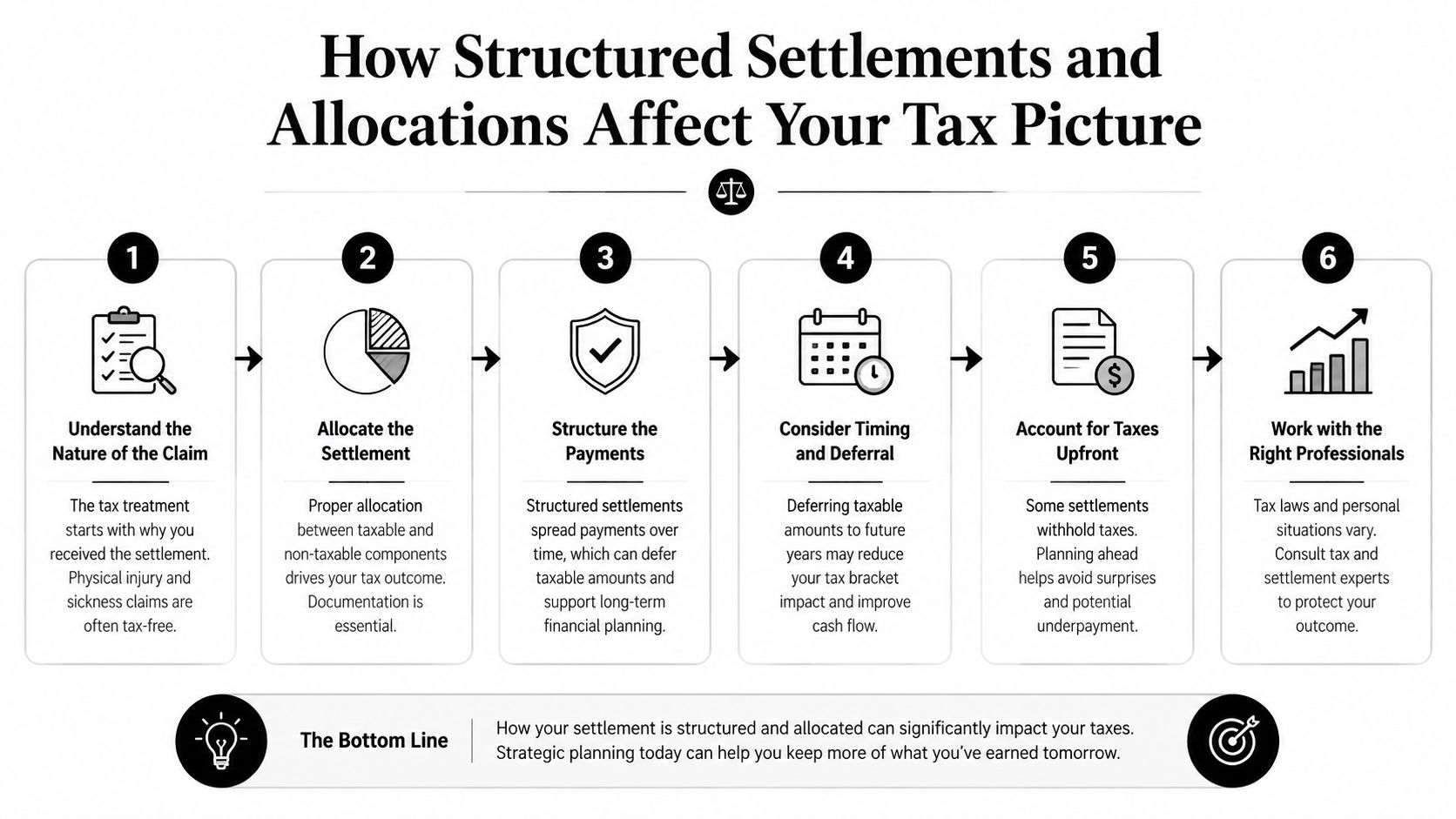
Have your lawyer review the release and allocation terms before you sign. Then ask a CPA or tax attorney to examine the federal consequences. Compare structured settlements versus lump-sum recoveries based on your cash needs, financial stability, and tax analysis.
Practical rule: Never accept an allocation you cannot explain. The agreement becomes part of your tax documentation, not merely paperwork that closes the injury claim.
A Real-World Texas Example of a Tax-Smart Settlement
Consider a representative Houston car crash client who suffers a serious back injury and reaches a six-figure settlement after months of treatment. The client's recovery includes past medical bills, future medical care, pain and suffering, and lost wages connected to the physical injury. It also includes a small punitive-damages component that the client understands will be reported as income.
The lawyer doesn't leave the allocation vague. The settlement agreement separately identifies the physical-injury categories and the punitive amount. Before signing, the attorney and CPA review whether the language matches the medical records, treatment history, claim allegations, and negotiation history.
Records answer the hard questions
The client keeps medical bills, insurance reimbursement statements, receipts for out-of-pocket care, and earlier tax records. That documentation helps determine whether any reimbursed medical expense was previously deducted and received a tax benefit.
The result is a recovery that is overwhelmingly tied to physical harm, with only the identified punitive portion treated as reportable income. The client avoids the fear of opening a settlement account and later discovering that every dollar was taxable.
That outcome isn't automatic. It comes from early review, accurate descriptions, and coordination between legal and tax professionals. A lawyer should never promise that a particular allocation will control the IRS, but a clear agreement gives the reporting position a factual foundation.
The filing deadline remains separate from the tax analysis. The Two-Year Deadline for Texas Injury Claims explains why most Texas injury lawsuits must be filed within two years under CPRC 16.003. Waiting to organize records or seek advice can create problems in both the claim and the tax review.
Practical Steps to Avoid Tax Surprises After Your Settlement
Tax planning starts the day after the accident, not when the insurer sends a release. Your records should show what happened, what treatment you received, what insurance paid, and what you personally paid. Those details help establish the physical-injury connection and identify any prior deduction issue.
Build a settlement file
Use one secure file, whether paper, digital, or both. Include:
- Medical documentation: Keep bills, treatment notes, prescriptions, provider statements, and records of future-care recommendations.
- Payment history: Save insurance explanations, reimbursement statements, lien notices, and out-of-pocket receipts.
- Tax records: Ask your tax professional to review whether injury-related medical expenses were deducted on earlier returns.
- Income evidence: Preserve wage records and employer information supporting lost-income or earning-capacity claims.
- Settlement drafts: Keep each version so changes to allocations and taxable components can be tracked.
Review the agreement before signing
The headline settlement amount isn't enough. Read the language describing physical injury, pain and suffering, medical expenses, lost wages, interest, and punitive damages. Ask whether the wording accurately reflects the claim and whether any taxable amount is identified separately.
Don't deposit the proceeds into a joint account without documenting ownership and the settlement breakdown. Don't assume punitive damages are tax-free. Don't guess about a prior medical deduction when your tax records can answer the question.
A CPA should review any potentially taxable portion before distribution. Your lawyer should also address liens and claims against the recovery, because the amount you receive, the amount reported, and the amount available after obligations can be different figures. For related financial issues, see this resource on negotiating medical bills after settlement.
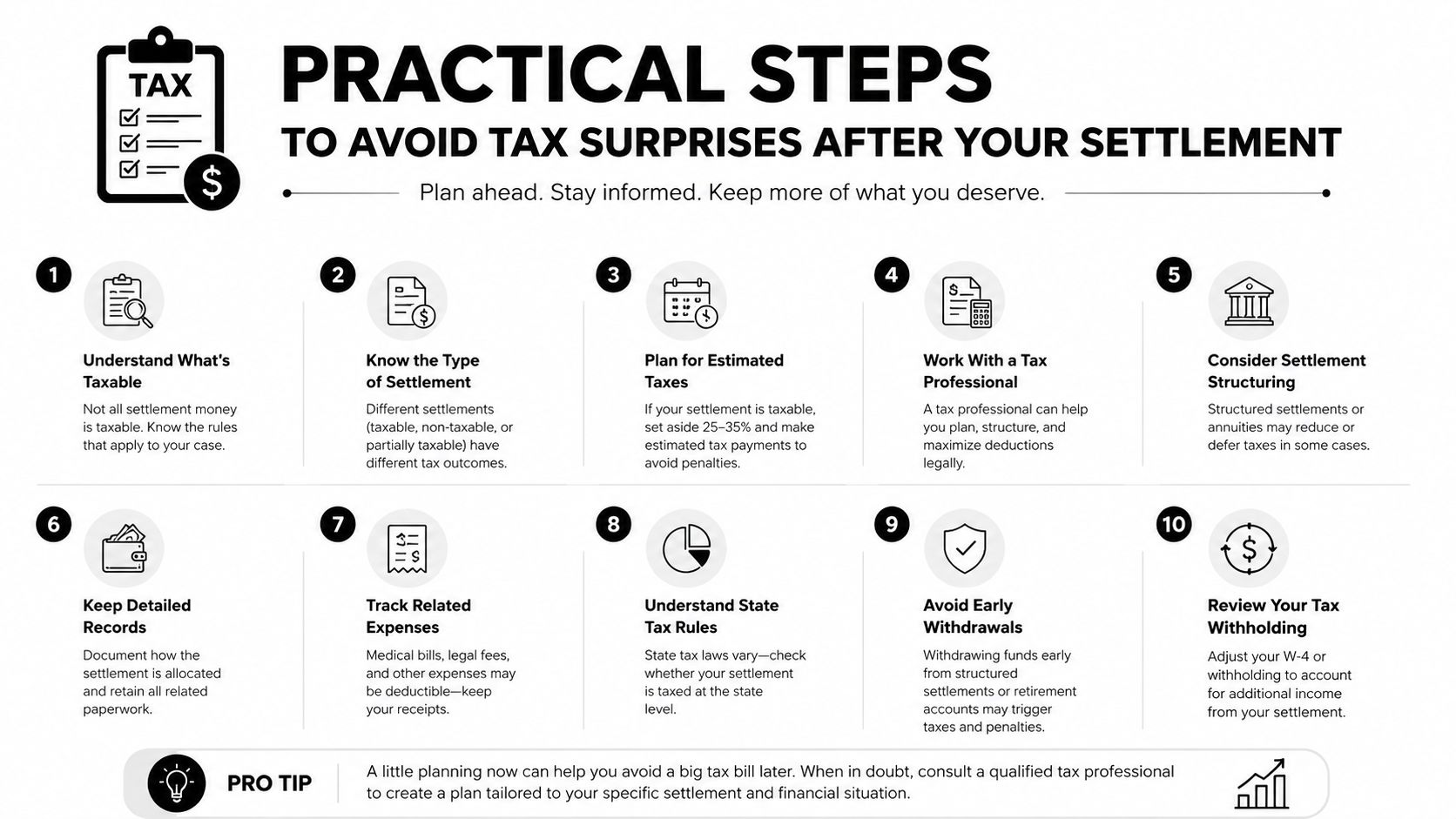
Thoughtful planning protects more than the money. It gives you a written explanation for the recovery and reduces the stress of answering tax questions later.
Getting Help and Scheduling Your Free Consultation
Most Texas injury settlements tied to physical harm are excluded from federal income and aren't subject to Texas personal income tax. The exceptions are narrow but important. Punitive damages, interest, and reimbursed medical expenses connected to a prior tax benefit can require different treatment, and emotional-distress payments without physical injury need careful review.
Your legal team should protect more than the liability claim. A Texas personal injury lawyer can investigate negligence, challenge comparative-responsibility arguments, preserve evidence, and meet the filing deadline. The same lawyer should also insist on settlement language that accurately describes the physical injuries and separates categories that may carry different tax consequences.
The Law Office of Bryan Fagan, PLLC represents injured Texans and families in car, truck, catastrophic injury, and wrongful death matters. A wrongful death lawyer in Texas can help families pursuing a claim after a fatal crash, while a truck crash lawyer Houston families can reach can address commercial-driver and trucking-company disputes. Representation is offered on a contingency-fee basis, with no attorney fee unless the firm wins, and the firm serves Houston, Dallas-Fort Worth, Austin, San Antonio, and surrounding communities.
Schedule a free consultation before signing a release or accepting an unexplained allocation. Recovery is possible, and legal help is one phone call away.
The Law Office of Bryan Fagan, PLLC can review your injury claim, protect your rights against insurers, and help coordinate settlement language with tax professionals. Visit Law Office of Bryan Fagan, PLLC to schedule a free consultation and take the next step toward protecting your recovery.