A serious accident can change your life in seconds, but you don't have to face it alone. If you're sitting beside a damaged vehicle after a collision on I-10, the Grand Parkway, or another Katy road, you may be dealing with pain, confusion, medical bills, missed work, and an insurance adjuster asking questions before you understand what happened.
The steps you take during the first hours can affect your ability to recover compensation. Texas law focuses on fault, evidence, deadlines, and documented losses. A car accident lawyer in Katy, TX can help preserve the facts, handle insurers, and protect your claim while you focus on treatment.
Life After a Crash in Katy
The impact may be over, but the crisis often continues. After a Houston-area freeway crash, you might remember traffic slowing, a sudden brake light, and the force of another vehicle hitting yours. You may feel shaken and assume the pain will pass. Meanwhile, the other driver's insurer may already be trying to decide how much your claim is worth.
Katy crashes can involve fast commuter traffic, multiple vehicles, changing lanes, and disputed responsibility. A collision may occur near a part of Katy associated with Harris County, Fort Bend County, or Waller County. That location can affect where a lawsuit is filed, the local jury pool, court procedures, scheduling, and litigation strategy. Katy is not one uniform legal venue.
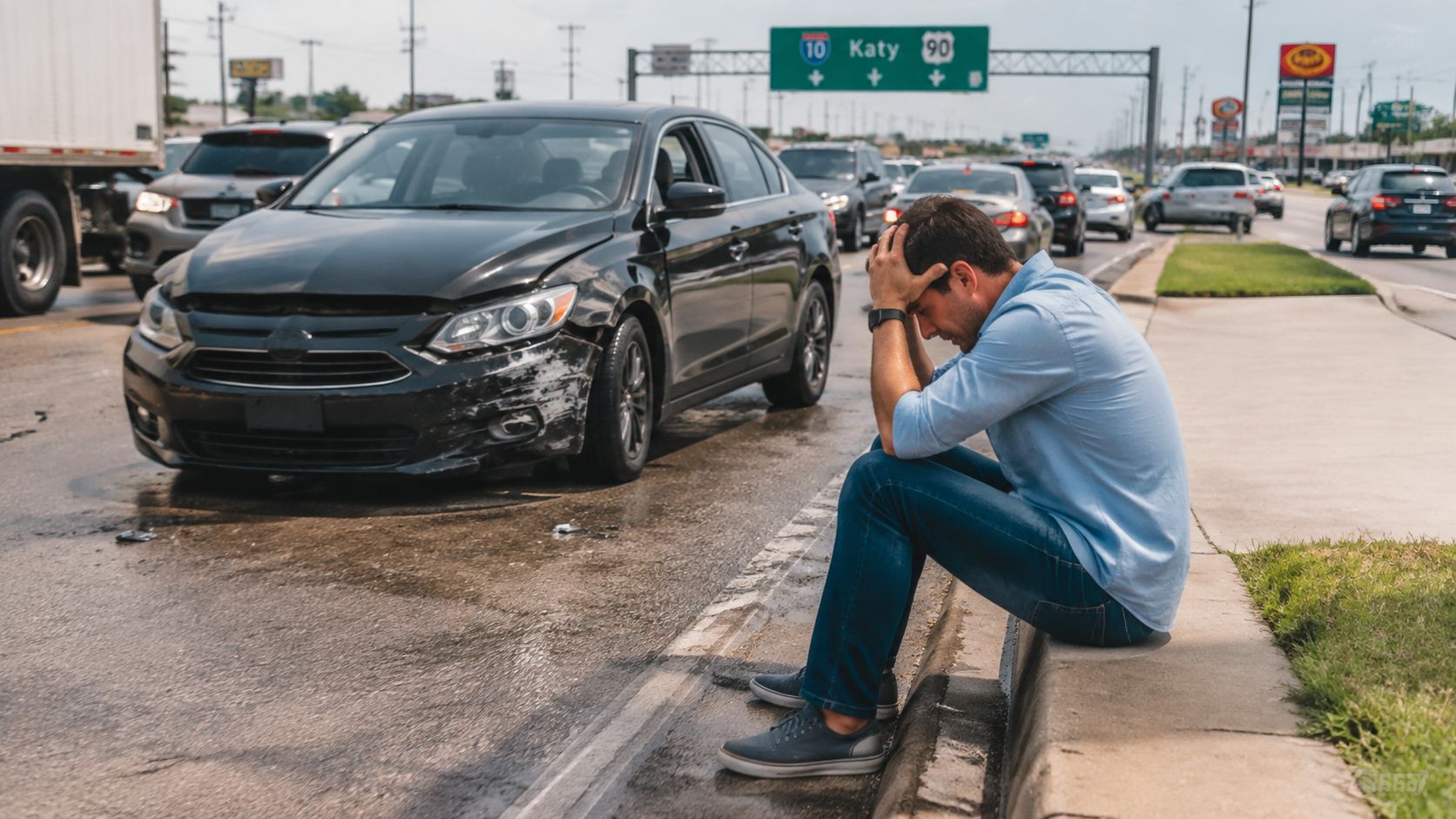
Why the first hours matter
Your health comes first. Call emergency services when necessary, follow medical advice, and don't dismiss symptoms that appear later. At the same time, preserve what can disappear quickly, including vehicle positions, road conditions, witness memories, traffic-camera footage, and electronic data.
Texas recorded 4,150 traffic deaths in 2024, and the Texas Department of Transportation reported a fatality rate of 1.35 deaths per 100 million vehicle miles traveled, a 5.25% decrease from 2023. TxDOT's 2024 crash report also shows why serious collisions can lead to injury, wrongful-death, and uninsured or underinsured motorist claims.
Practical rule: Heal first, but preserve evidence immediately. You shouldn't have to choose between medical care and protecting your legal rights.
A lawyer can investigate the crash, identify the proper county, request records, and deal with the insurance company. The Texas steps to take after a car accident can help you organize those first decisions. Early guidance is especially important after a commercial-vehicle crash, drunk-driving collision, distracted-driving wreck, or fatal accident.
Immediate Steps to Protect Your Claim
Do these things at the scene if you're physically able. If you're seriously hurt, let emergency personnel take control and ask someone you trust to preserve information for you.
At the scene
Call 911 and request medical help. Tell the dispatcher if anyone is injured. Texas insurance guidance recommends calling police when someone is injured or when the other driver leaves the scene. A police report can document the location, vehicles, reported statements, and immediate observations.
Move to safety when possible. Don't stand in an active traffic lane or walk around a freeway shoulder unnecessarily. Turn on hazard lights and follow emergency personnel's directions.
Exchange information. Collect the other driver's name, contact information, license details, insurance information, and vehicle description. Don't argue about fault. A simple statement such as “I'm going to let the investigation determine what happened” is safer than an admission.
Photograph the scene. Capture vehicle damage, skid marks, debris, traffic signals, lane markings, weather, road defects, and nearby businesses. Take wide photographs before conditions change, then closer images of important details.
Find witnesses. Ask people who saw the collision for their names and contact information. Witnesses may leave before an officer finishes the report, and their memories can become less precise.
Preserve physical evidence. Keep damaged clothing, helmets, child seats, personal items, and vehicle components. Don't repair or discard anything before it has been photographed and evaluated.
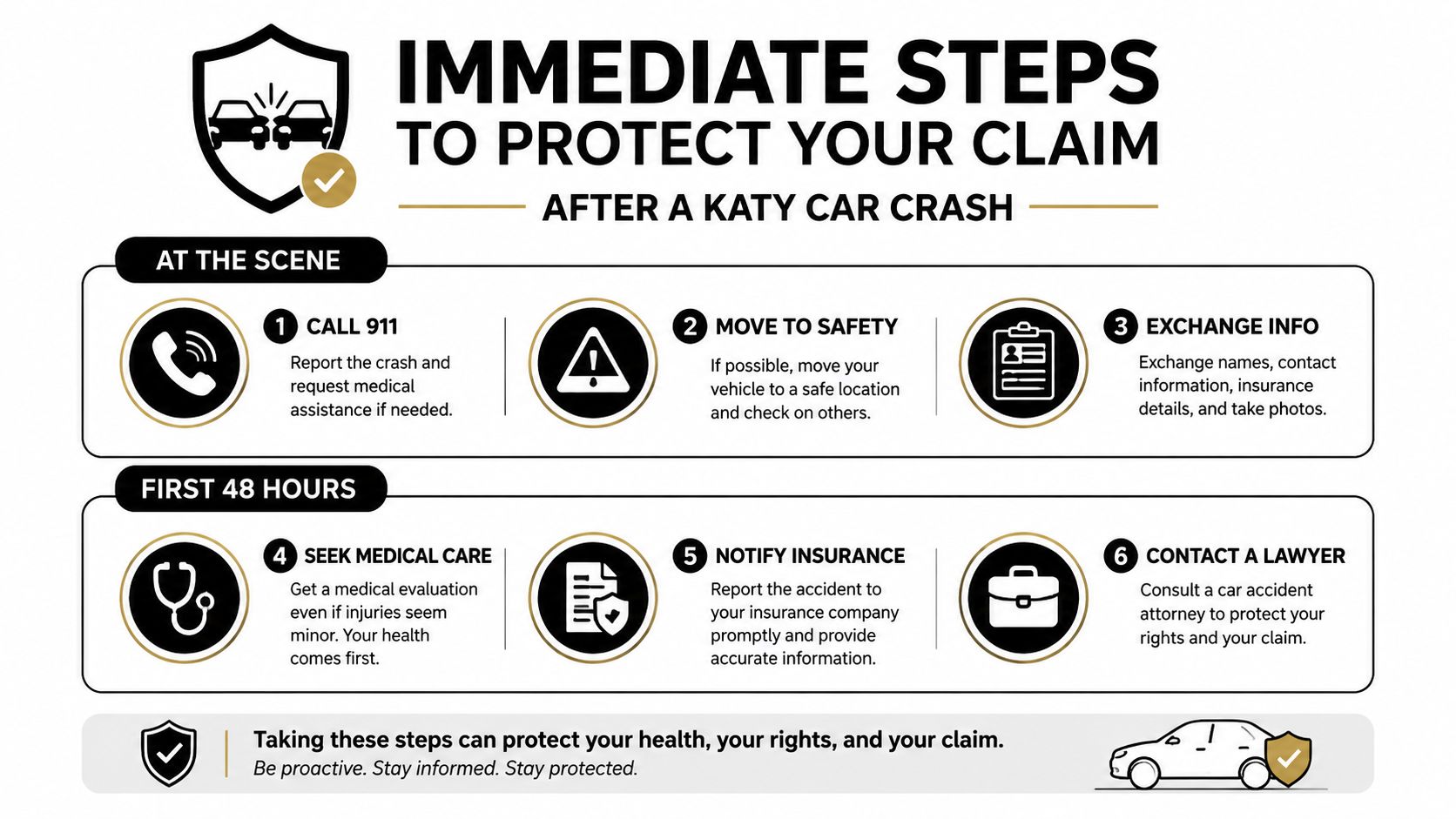
During the first 48 hours
Get medical attention even if the collision seems minor. Some injuries aren't obvious at the scene, and prompt records help connect your symptoms to the wreck. Tell the provider about every symptom, follow-up recommendation, restriction, and prescription.
Notify your own insurer promptly, but keep the report factual and limited. You may need to report the collision under your policy, particularly if uninsured or underinsured motorist coverage could matter. You don't have to provide a detailed recorded statement to the other driver's insurer before receiving legal advice.
Keep a file containing the crash report, photographs, medical records, bills, prescription receipts, employer communications, repair estimates, and notes about symptoms. Save texts, emails, voicemails, and letters from insurers. The resource Dealing With Insurance Companies After a Texas Accident addresses how insurers try to reduce payouts and how to protect your claim.
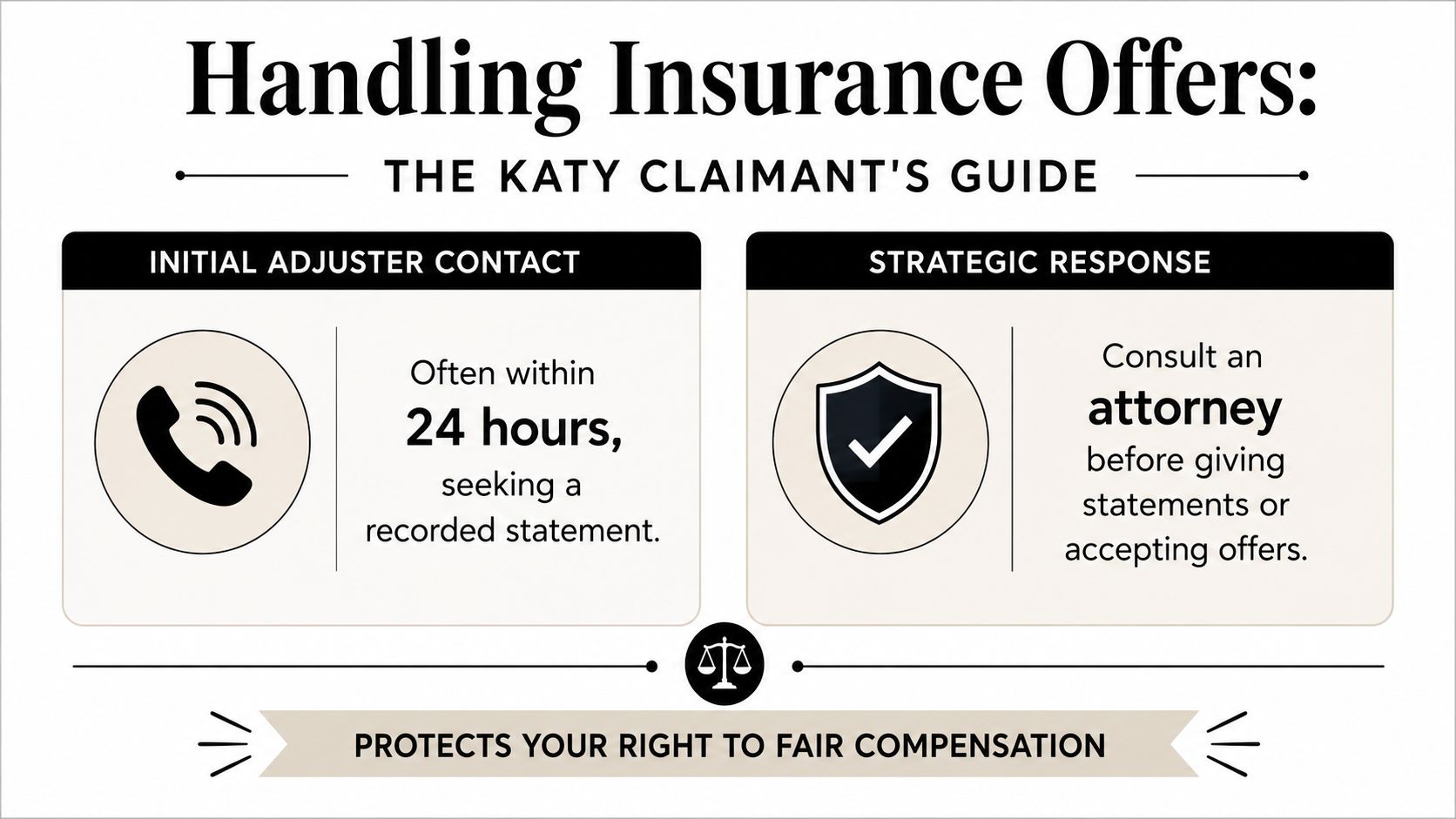
Before discussing settlement or signing a release, contact counsel. A lawyer letter of representation can direct communications through your attorney and reduce the chance that an adjuster uses an incomplete statement against you.
Texas Deadlines and Fault Laws
Texas uses a fault-based system. The person or company whose negligence caused the crash may be responsible for damages. Negligence usually involves a failure to use reasonable care, such as speeding, following too closely, distracted driving, or driving while impaired.
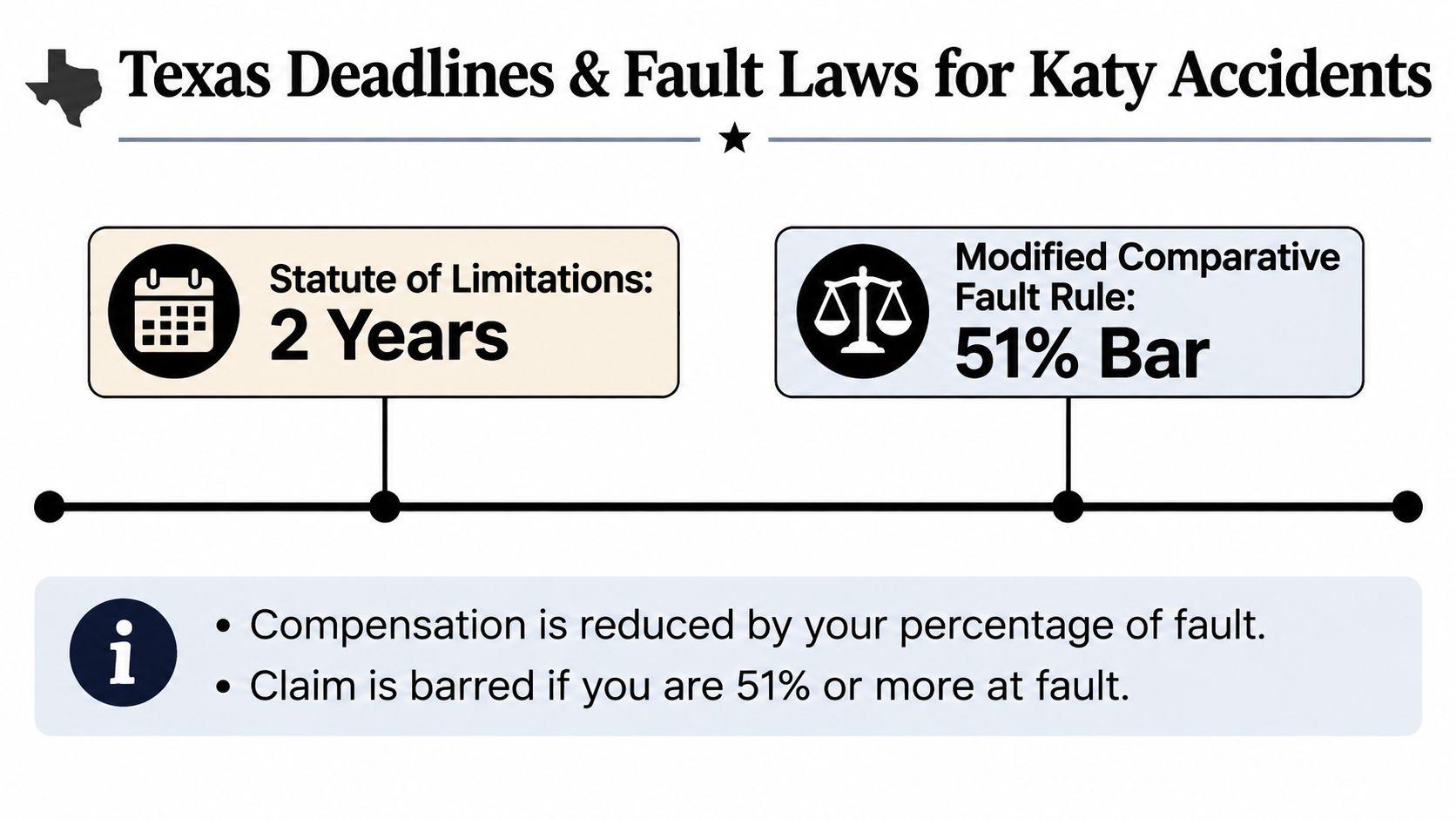
Texas also follows proportionate responsibility rules. Your recovery is reduced by your percentage of fault. You can still recover when you're 50% or less responsible, but recovery is barred when your responsibility is greater than 50%, as summarized in Texas comparative negligence rules.
How fault disputes affect Katy claims
Suppose a driver changes lanes on I-10 and strikes your vehicle. The insurer may argue that you accelerated, failed to signal, or could have avoided the collision. Your lawyer should gather photographs, witness accounts, vehicle data, traffic footage, medical records, and other evidence that tests those arguments.
Distracted driving requires special attention. Texas reported 93,497 distraction-related crashes in 2021, causing 431 deaths and 2,932 serious injuries, according to TxDOT's distracted-driving report. Proving distraction may require scene evidence, phone records when available, vehicle telematics, witness testimony, and timing reconstruction.
The same issue can arise in a rideshare case. Uber and Lyft accident claims in Texas can involve questions about the driver's status and available coverage, so don't assume the ordinary insurance policy tells the whole story.
How long do you have to file a claim in Texas?
Texas generally gives you two years to file personal-injury and property-damage lawsuits. The rule comes from Texas Civil Practice and Remedies Code Section 16.003. Wrongful-death claims generally also use a two-year period, usually beginning on the date of death rather than the crash date. Texas's car-accident statute of limitations explains why waiting for treatment to end can create serious problems.
The deadline generally runs from the date the claim accrues, not from the date you reach maximum medical improvement. A Katy collision in Harris County may follow a different filing path from one in Fort Bend County, but neither venue eliminates the deadline. Venue questions should be resolved early, especially when evidence may be held by a trucking company, business, or government entity.
Navigating Insurance and Settlement Offers
Insurance adjusters may contact you quickly after a wreck. Their job is to evaluate exposure for the insurer, not to calculate the largest possible recovery for you. An early call may seek a recorded statement, a medical authorization, or information that can later support an argument about fault or the seriousness of your injuries.
Handling the claim yourself can feel efficient. You can speak directly with the adjuster, send bills, and review an offer without attorney involvement. That approach may work for a simple property-damage matter, but it becomes risky when treatment continues, liability is disputed, multiple people are injured, or future care may be necessary.
Two approaches, different risks
| Handling the claim alone | Working with a lawyer |
|---|---|
| You communicate directly with the adjuster. | Your lawyer manages insurer communications. |
| You must gather and interpret records. | Counsel identifies missing evidence and damages. |
| You evaluate the offer without legal analysis. | Counsel assesses liability, coverage, and long-term losses. |
| You may face pressure to resolve quickly. | Your attorney can prepare the case for litigation. |
An adjuster's first offer may not account for future treatment, lost earning capacity, pain, emotional distress, or the effect of an injury on daily life. Accepting a settlement usually means releasing further claims connected to the collision. Don't sign because you need immediate help with bills.
What a Katy car accident lawyer changes
A car accident lawyer Katy TX can require the insurer to address the claim through documented communications, identify policy issues, and present evidence in an organized demand. Counsel can also investigate whether another driver, employer, vehicle owner, manufacturer, or other party shares responsibility.
Keep a contact log. Record the date, caller, subject, requested documents, and your response. Don't exaggerate symptoms, speculate about fault, or post collision details on social media. If the insurer delays or denies the claim, your lawyer can evaluate whether negotiation, arbitration, or litigation is appropriate.
A Houston car accident attorney should also understand the local venue issues that can shape settlement posture. A claim connected to Harris County may present different procedural considerations from one connected to Fort Bend County. That local analysis matters before an insurer builds the first version of the story.
Calculating Your Total Damages
A strong claim accounts for more than the repair invoice. Texas car accident victims may seek compensation for economic losses and non-economic harm, depending on the evidence and legal circumstances.
Economic damages can include:
- Medical expenses: Emergency care, diagnostic services, treatment, medication, rehabilitation, and related bills.
- Lost wages: Income missed during recovery, supported by employer and payroll records.
- Future care: Medical needs that doctors reasonably connect to the crash.
- Property damage: Vehicle repairs, replacement value, towing, storage, and damaged personal property.
- Reduced earning ability: Future income losses when an injury affects the work you can perform.
Non-economic damages address losses that don't arrive as invoices. They can include pain and suffering, emotional distress, physical impairment, disfigurement, and loss of enjoyment of life. A person with a shoulder injury may struggle to work, sleep, drive, exercise, or care for family members even when the medical bills seem manageable.
Documentation makes the difference
Keep a daily symptom journal. Note pain, sleep disruption, medication effects, missed activities, mobility limits, and changes in family responsibilities. Save every medical instruction and attend recommended appointments. Gaps in treatment can give an insurer an argument that your injury improved or wasn't related to the crash.
Future losses require careful proof. Doctors may explain the expected course of treatment, while vocational professionals or financial analysts may evaluate work limitations. Your attorney can organize that evidence so the claim reflects both current harm and consequences that may continue.
Vehicle damage can also involve diminished value, even after repairs. If your vehicle's market value may have changed, this guide to how to file a diminished value claim may help you understand the documentation an appraisal can address.
A careful damages calculation prevents premature settlement. You should understand the full effect of the crash before deciding whether an offer is fair.
How We Fight for Your Recovery
The Law Office of Bryan Fagan, PLLC handles Texas motor-vehicle injury claims through investigation, negotiation, and trial preparation. The firm represents clients in car, truck, rideshare, uninsured-motorist, catastrophic-injury, and wrongful-death matters. A truck crash lawyer that Houston families trust should examine driver conduct, employer responsibility, vehicle maintenance, cargo, and insurance coverage instead of treating a commercial collision like an ordinary crash.
The firm works on a contingency-fee basis, so clients do not pay attorney fees unless the firm wins the case. Before signing, confirm how fees and case expenses are calculated.
Evidence and venue strategy
Evidence can disappear quickly after a Katy collision. A legal team may obtain crash records, interview witnesses, inspect vehicles, preserve surveillance footage, consult accident-reconstruction professionals, and review medical evidence. It should also determine whether the claim belongs in Harris, Fort Bend, or Waller County, because venue can affect how the case is handled and how settlement negotiations develop.
Families facing a fatal collision may need a wrongful death lawyer Texas residents can turn to for legal guidance and compassionate communication. Information about support for wrongful death cases can help families understand issues that may arise after a death.
The firm can handle deadlines, pleadings, insurer communications, and settlement negotiations while you focus on healing. Preparing each case for trial strengthens the position used to evaluate and negotiate an offer, even when the matter resolves without a verdict.
If you or a loved one was injured in a Katy crash, the Law Office of Bryan Fagan, PLLC can investigate the collision, protect evidence, and pursue compensation. Visit Law Office of Bryan Fagan, PLLC to schedule a free consultation.